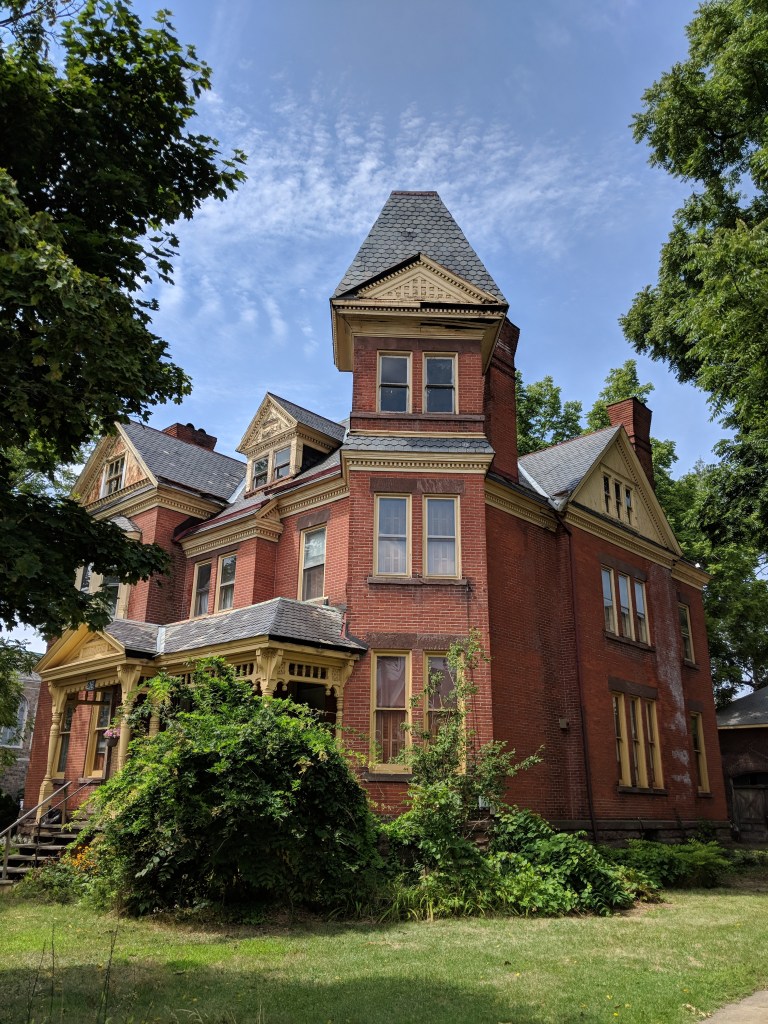
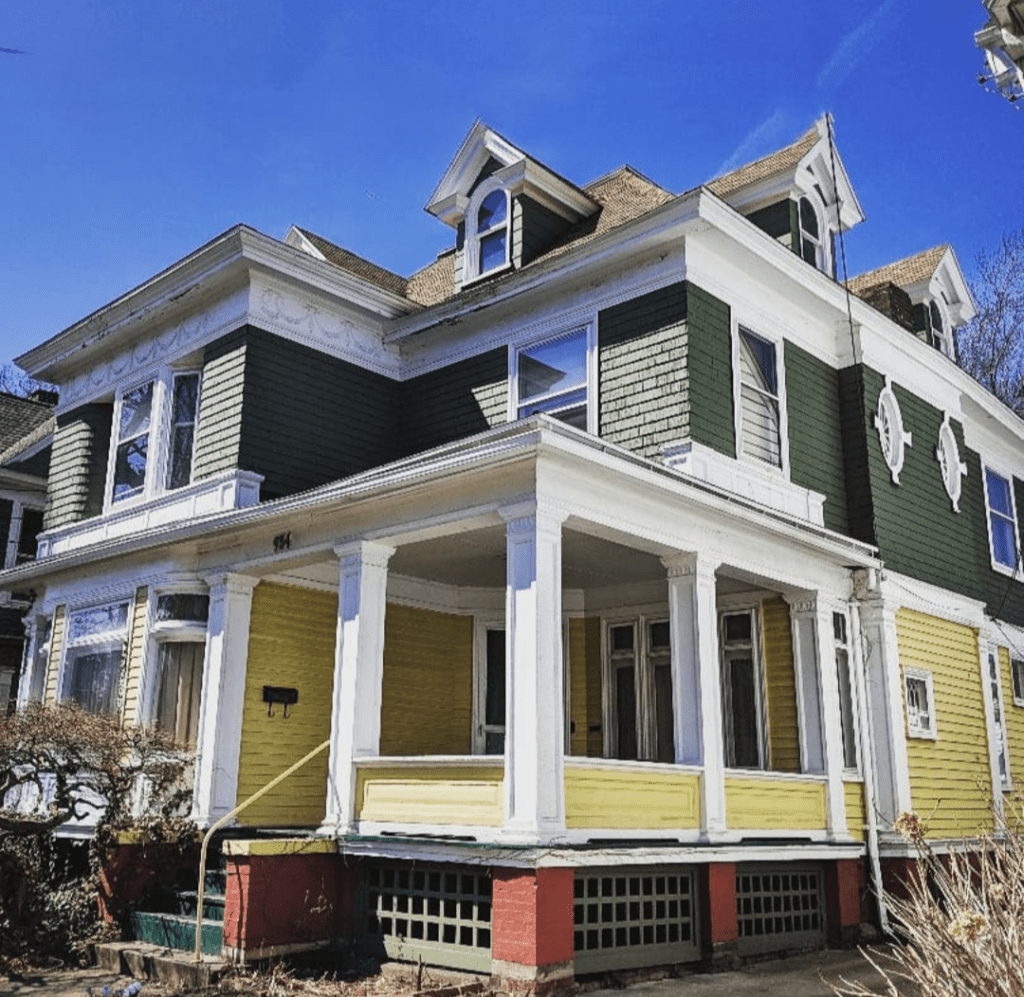
Our West Bayfront Pre-Porch Fest Historic Bike Ride

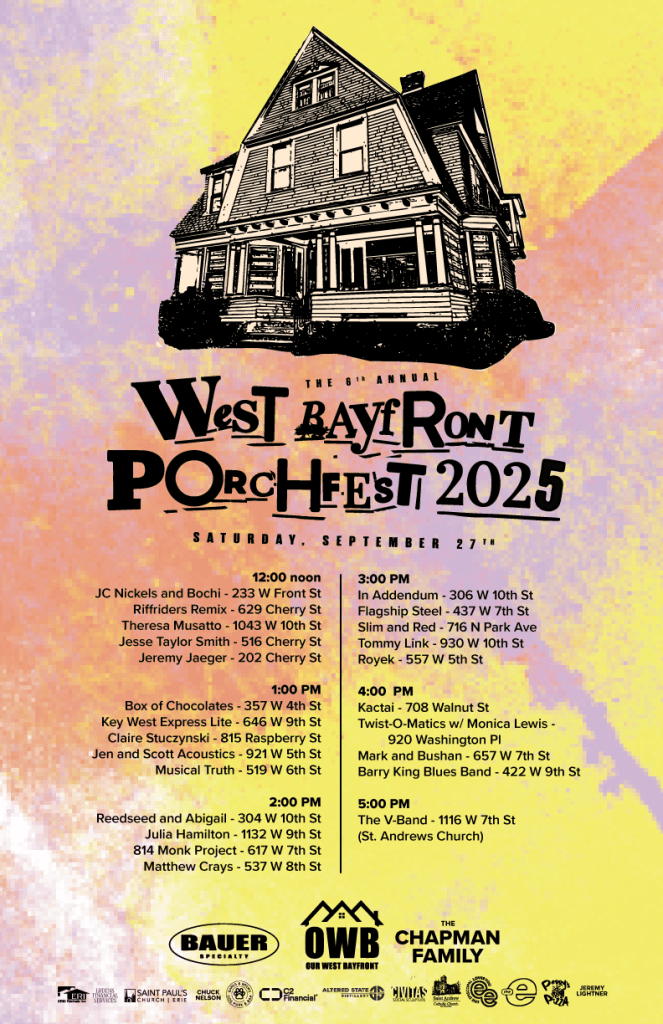
This bike ride was originally written for Our West Bayfront Porch Fest 2024. At the scheduled time, there was a downpour and we were unable to safely ride. As I had a scheduling conflict this year, and since many of these homes will also be hosting a local musical act again this year (2025), I’m including this route as a “Self Guided Porch Fest Bike Ride” for anyone who wants to learn more about some of the homes generously offering up their porches for the afternoon. Or, feel free to take this ride to learn more about these properties at any point! For a full listing of all of the porches and musical acts, visit Our West Bayfront’s website here!

And as always: please feel free to share this information widely, but do not attempt to use this information for personal profit. History can and should be free for everyone!

There is a Google Map of the ride directions here: https://maps.app.goo.gl/SBy48KhM7Z2YdeUz7

Starting out at Gridley Park, our first stop will be along the park at:
716 N. Park Ave. – The Diehl House (in 2025: hosting Slim and Red at 3 p.m.)
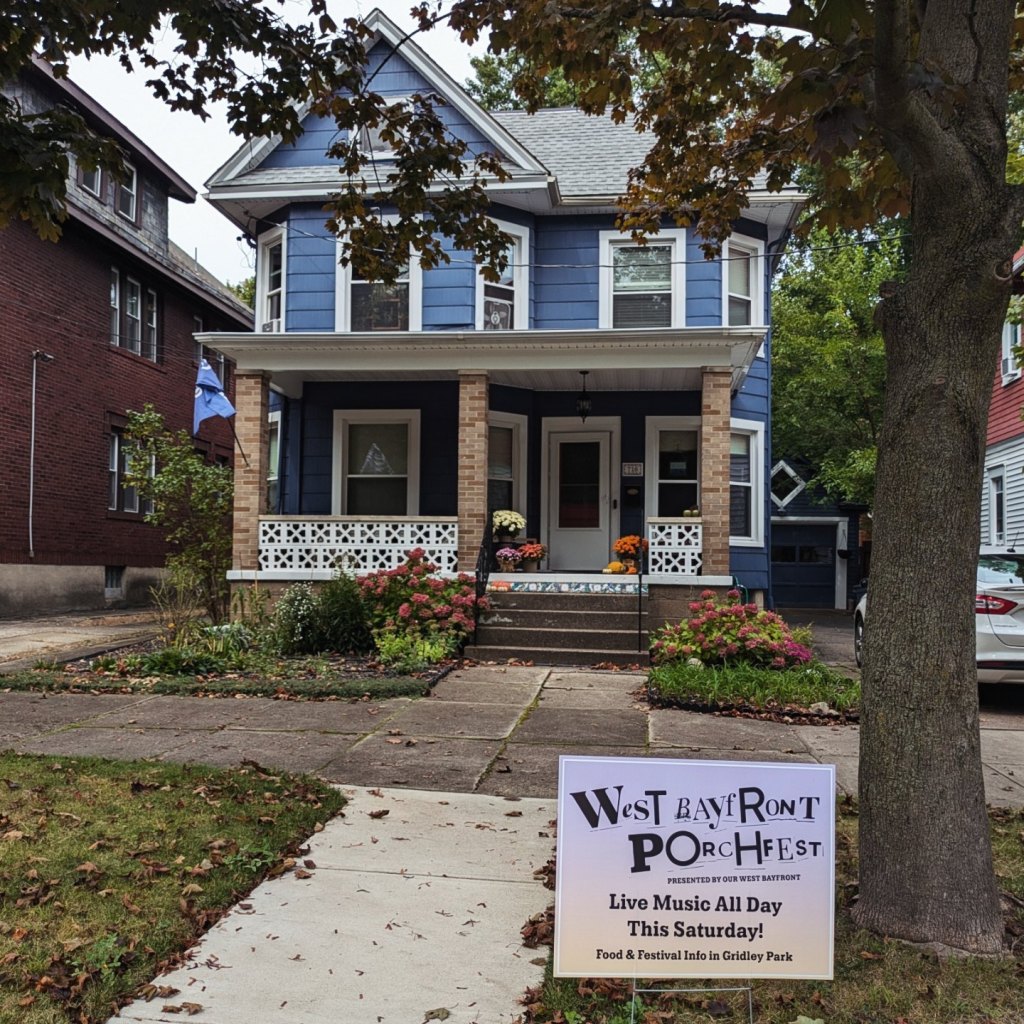
This home was built in 1923. This was once the home of John Christopher Diehl. He was born in Oxford, PA (near Gettysburg) in 1886 and lived at this home with his wife Mary and daughter Marian. He was a veteran of World War I and served as a Captain (Army Corps of Engineers) in the The Meuse-Argonne Offensive (the largest operation of the American Expeditionary Forces in World War I, with over a million American soldiers participating. It was also the deadliest campaign in American history, resulting in over 26,000 soldiers being killed in action and over 120,000 total casualties. It was one of the final battles and led to the eventual armistice).

He was the president of the American Meter Company. He was college educated at Gettysburg and went on to study in graduate school at the Massachusetts Institute of Technology. He won a national award from the Natural Gasoline Association and penned The Natural Gas Handbook which was used as a college textbook internationally.

From here we’ll head north on Liberty, turn right on Fourth and continue east on Fourth to:

357 W. 4th St. – The Boyd House (in 2025: Hosting Box of Chocolates at 1 p.m.)
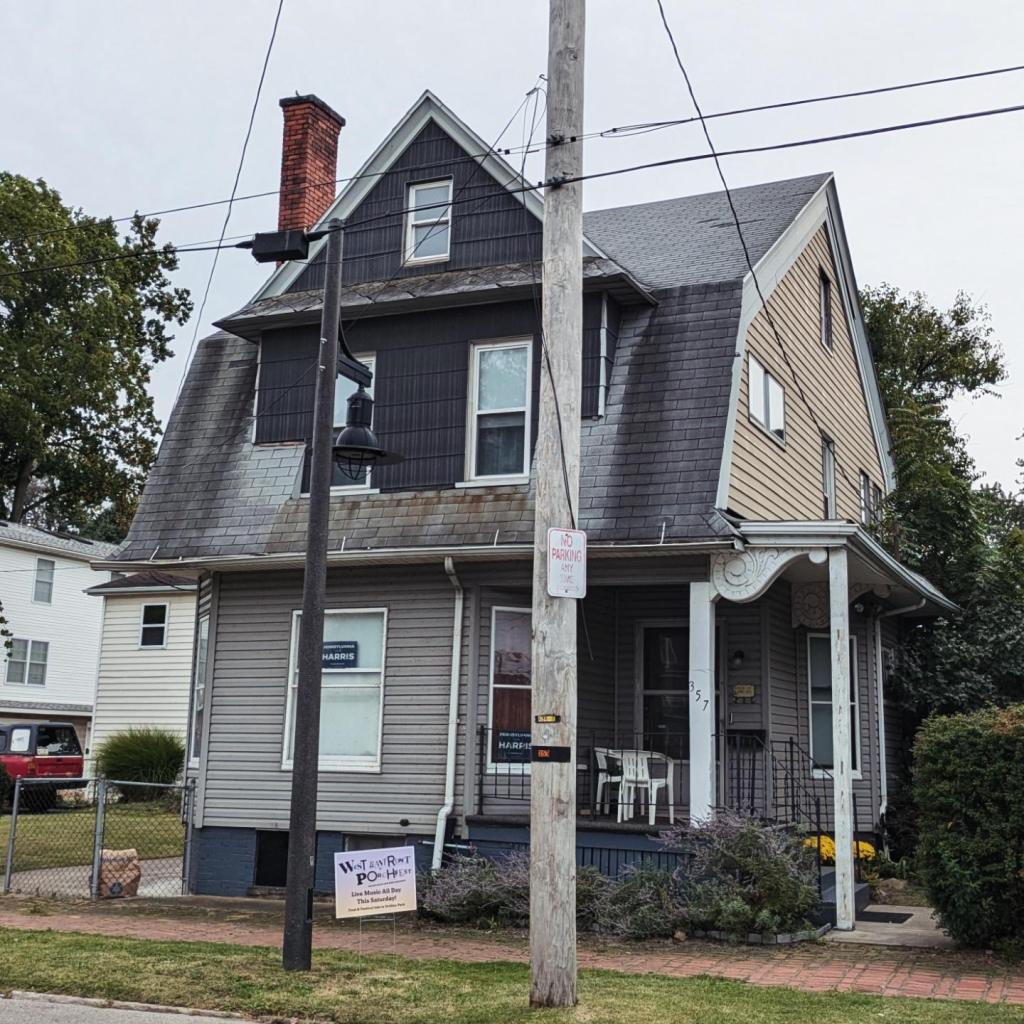
Built in 1900, this was the longtime home of Robert Boyd and Evelyn “Nonie” Hulbert Boyd. The couple inherited the home from Evelyn’s parents, Egbert and Fannie Hulbert. Robert was born in Erie in 1867 to Irish immigrants and owned the nearby grocery store at 4th and Chestnut; he was also a real estate agent. Robert died in 1950 at age 82 and Evelyn lived in the home until 1969 when she died at age 91 (so the home was in the same family for about 70 years). Evelyn was a singer and she regularly led the chorus at St. Paul’s Episcopal.

From here we’ll head south on Chestnut to W. 6th St. and make a left to:

323 W. 6th St. – The William Forster House (This home is not hosting a band in 2025)
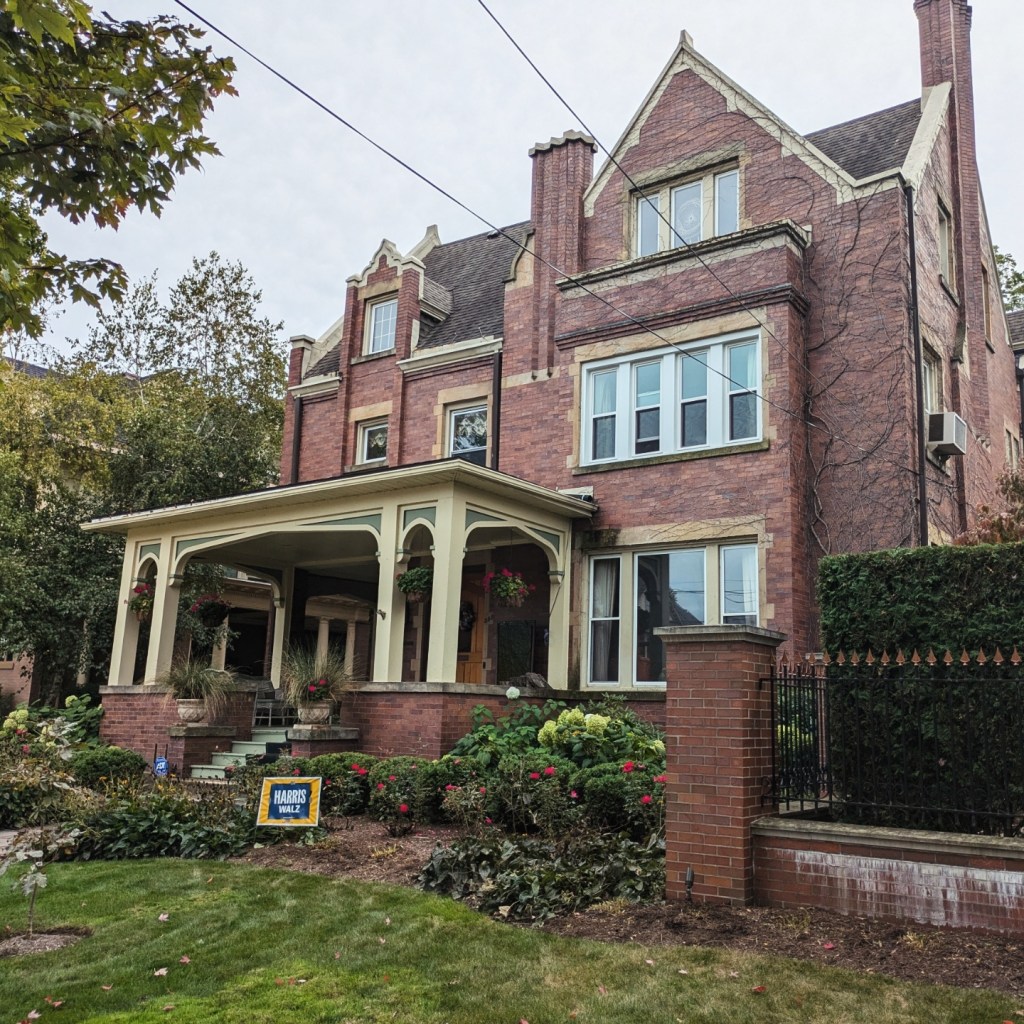
This home was built in 1904 by William Hays Forster, who was the president of the Hays Manufacturing Company. He lived in the home with his wife, Susan L. Forster, his son William Jr., his father Edwin Forster, two servants, and a cook. 

William’s grandfather Thomas Forster was a veteran of the American Revolution (and the Whiskey Rebellion). During the War of 1812, he led a volunteer group called the Erie Light Infantry. He owned one of the first sawmills in Erie, was a collector for the port of Erie, and started the Erie and Waterford Turnpike. The Forster family was one of the first to settle in Erie. William Hays Forster served in WWI,  graduated from Tufts Engineering College, and eventually took over his uncle’s (John W. Hayes) manufacturing business. He was a man about town, serving on the board of Hamot Hospital, was a member of the Kahkwa, Maennerchor, and Erie Clubs, was director of the Marine Bank, and was a member of St. Paul’s Episcopal.

The lot next door to this home was once the Andrew McMullen House which was torn down in 2014 to create the current Elizabethan style garden and conservatory. 

From here we’ll continue east on 6th St. to Sassafras and turn right. Take Sassafras to 10th and turn right to:

304 W. 10th St. – The Erhart House (In 2025: Hosting Reedseed and Abigail at 2 p.m.)
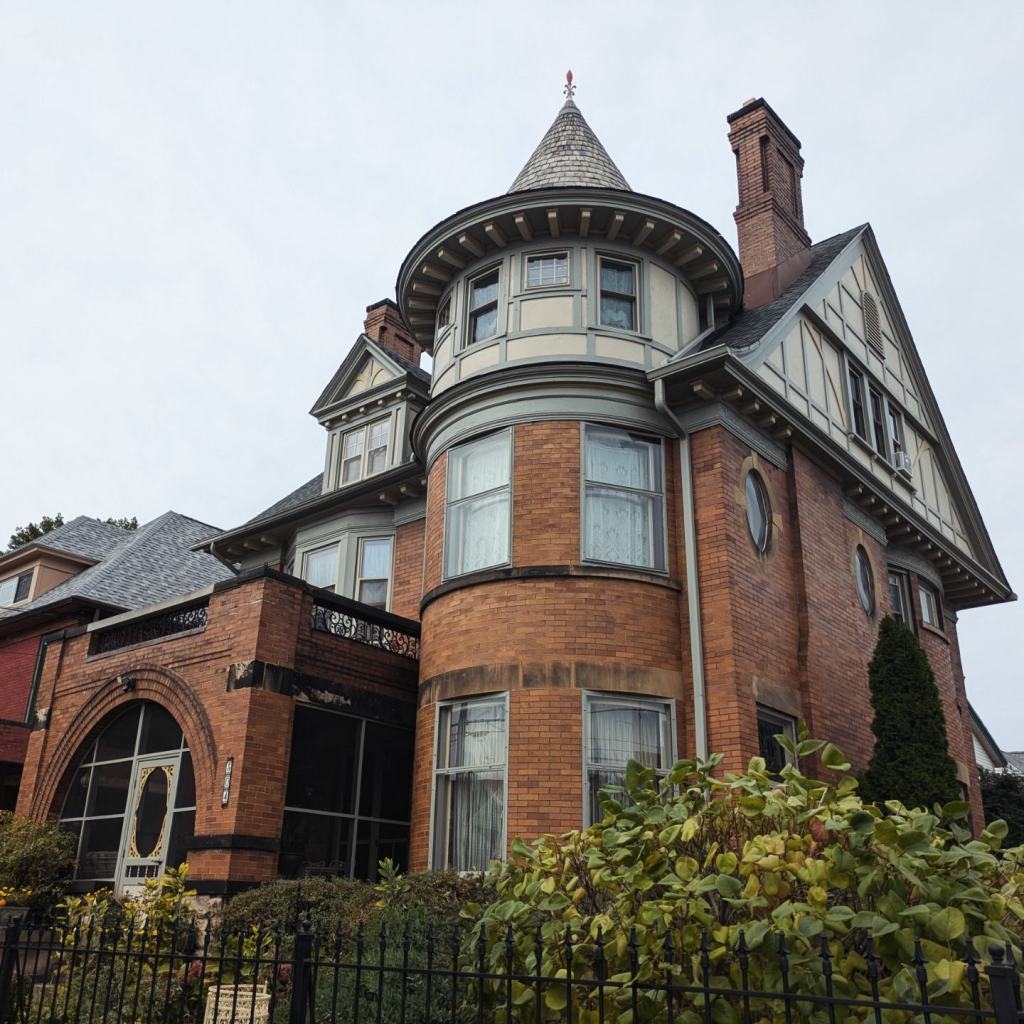
Built in 1905 by the Kirschner Brothers Builders (who were prominent builders around the turn of the century) this home was built for the Erhart family. Joseph Erhart’s family immigrated to Erie from Germany in 1832, were leather workers, and owned a saddle and harness shop behind the Reed Hotel (which was where the parking lot is now, behind the Richford Arms on North Park Row). Joseph served in the Civil War. He moved on up in the leather-working business and eventually owned a fancy leather store at 1305 State Street (luggage, wallets, gloves, etc). Joseph died in 1924, his wife Mary died in 1935, at which point the home passed to Joseph and Mary’s daughter Mary and her husband George Conrath (who worked in gas and oil). Mary Conrath lived in the home until her death in 1963.

From here we’ll turn right onto Myrtle to 9th. Then left on 9th to:
519 W. 9th St. – The Semmence House (This home isn’t hosting a band in 2025)
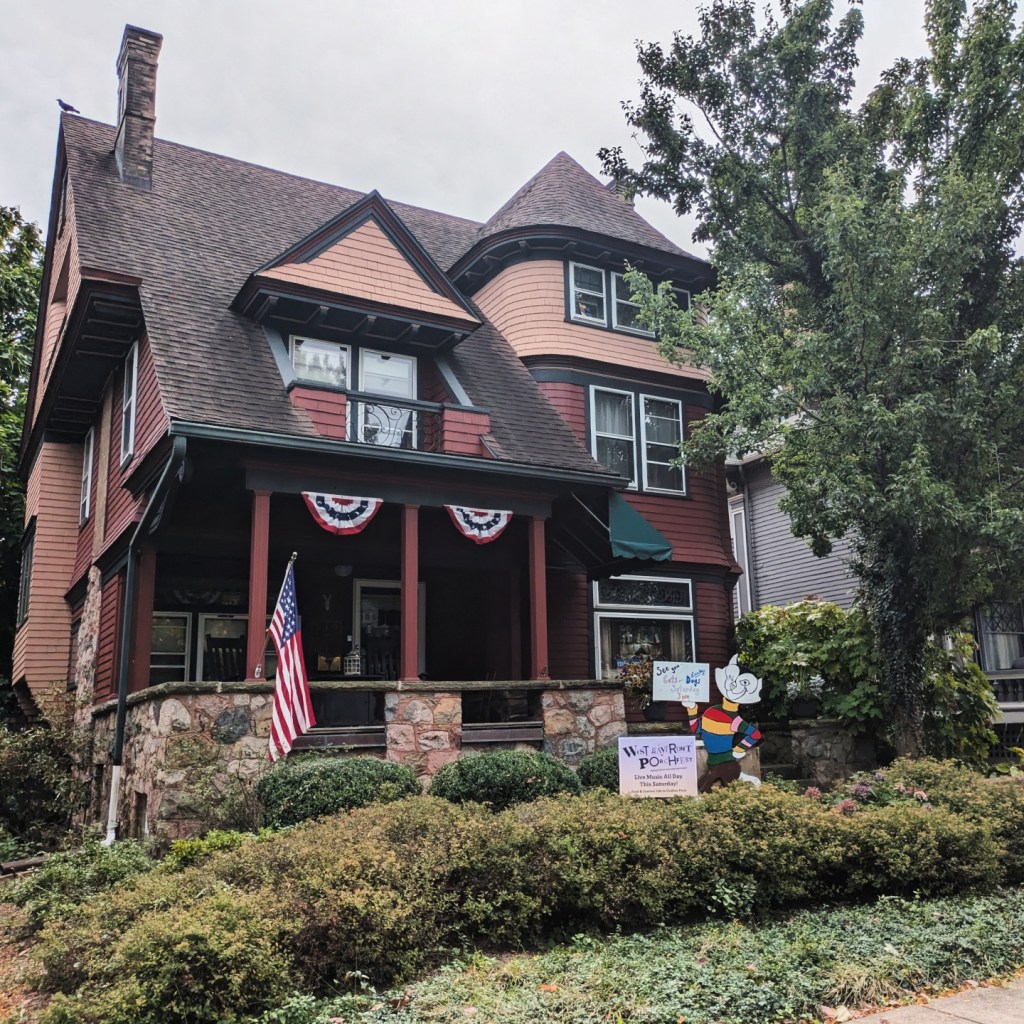
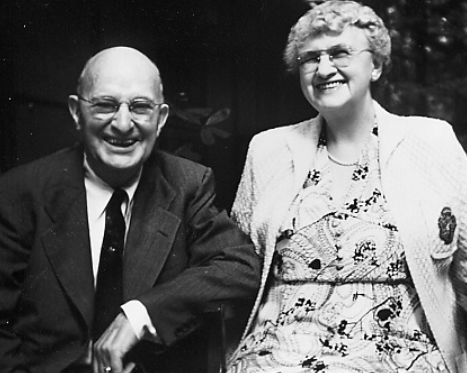
This was once the home of Edwin A. and Minnie Semmence. Edwin was originally from Maryland. He took over the business of the Star Electrical Company on State Street from his father, Edwin, who was a pioneering resident of Erie. Edwin A. was very civically active. He was the chairman of the Erie Chamber of Commerce for a while. Edwin was a boater and was Commodore on a ship called the USS South American which carried 200 Erieites on a four day trip throughout the Great Lakes. They had three daughters that were all extremely bright and graduated from college. Their daughter Edith went on to graduate school and studied Occupational Therapy, working at Water Reed. The family lived here into the 1940s.
While I don’t have documentation to prove it – this home looks very much like it was designed by architect C. Paxton Cody. C. Paxton Cody designed a number of homes and buildings in Erie around the turn of the 20th Century. Some of his most well known designs are the number of Craftsman Style homes he built on Lincoln Avenue. He also designed homes and buildings in Pittsburgh and Cleveland and was the president of the PA State Association of Architects.  In this neighborhood, he also designed the church (turned apartments) just south of 9th Street on Liberty. He designed a number of homes along W. 9th Street.

Continuing west on 9th Street, our next stop:

646 W. 9th St. – The Jones Siegel House (In 2025: Hosting Key West Express Lite at 1 p.m.)
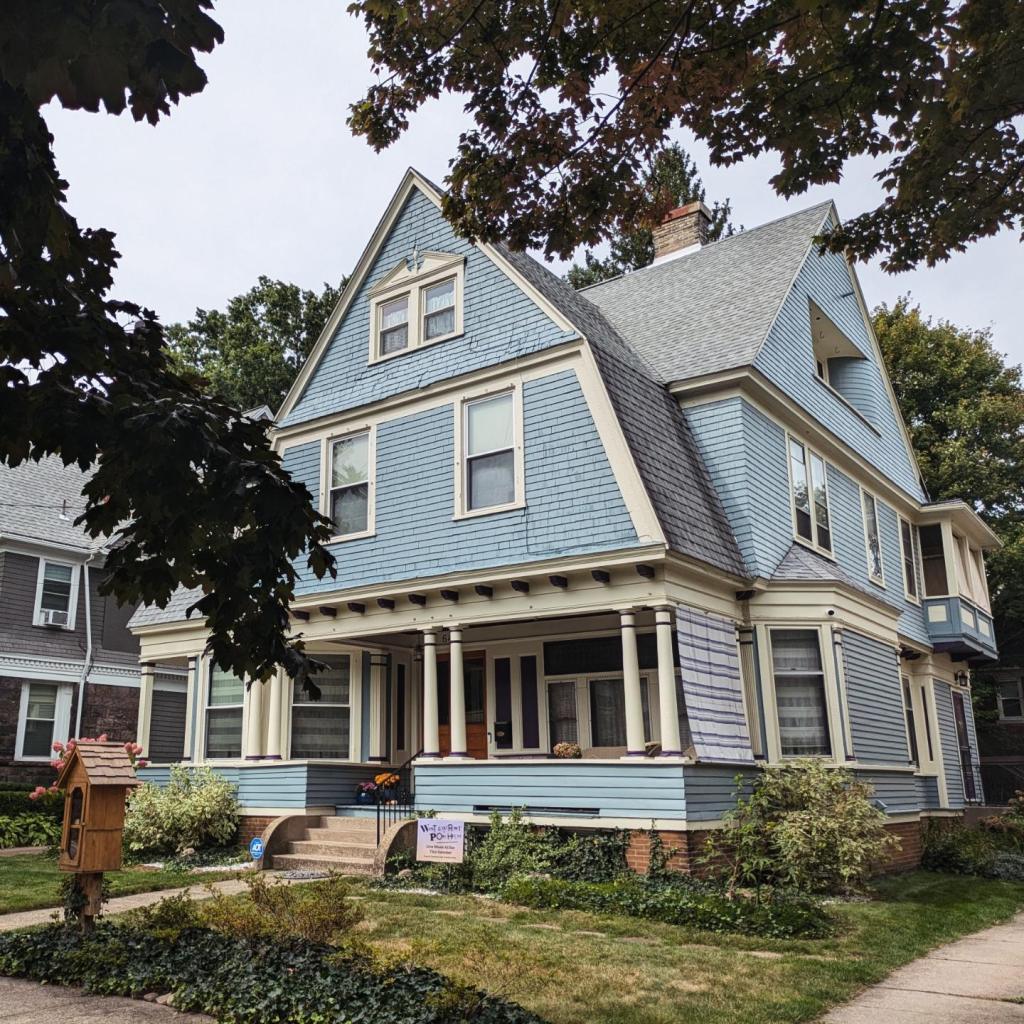
This home was originally occupied by Jesse Supplee, a civil engineer and building inspector for the City of Erie. Eventually the home was purchased by the daughter of Col. Percy Lancelot Jones, who was a U.S. Army Physician as well as the superintendent of Hamot Hospital in the 1930s, and was instrumental in the invention of the ambulance. Elizabeth Jones Siegel and her husband Charles Siegel, who was part of the J.F. Siegel Co. which produced coal and oil, lived in the home for the bulk of its existence, until 2007. Elizabeth died in 2010, at age 94. The architectural style of this house is Shingle style – wood cladding, asymmetry, large, imposing shapes and massing (how large the home appears), gambrel roofs with multiple gables, multiple verandas and porches, cedar shake shingling. 

Continuing west on 9th Street to Poplar, head north on Poplar to 7th, then head west on 7th to:

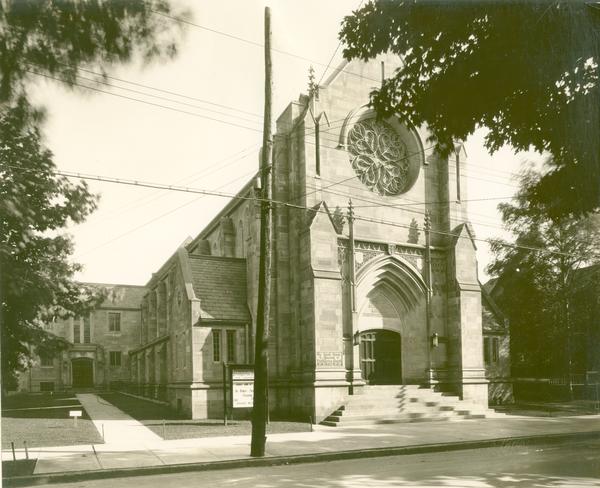
1116 W. 7th St. – St. Andrew’s Church (In 2025: Hosting The V Band at 5 p.m.)
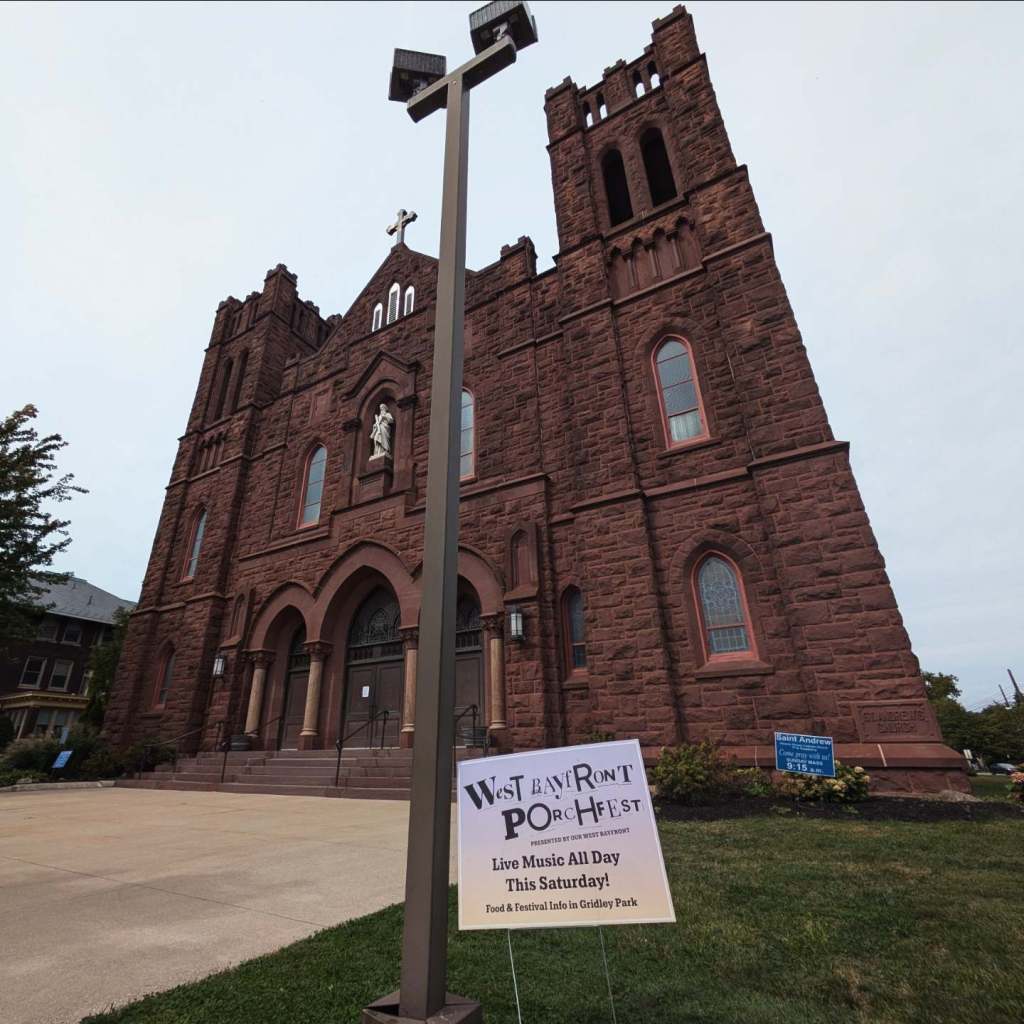
St. Andrew’s Catholic Church is over 150 years old – but this building is about 109 years old as it was built to replace the original structure which was destroyed in a fire. During Centennial celebrations it was discovered that there was a time capsule placed in the cornerstone in 1915. A church publication noted, “The capsule, made of copper and welded tight, withstood the test of time and weather. All of its contents — including the local newspaper headlining the sinking of the Lusitania, a glass bottle containing a handwritten letter from an unknown person from the parish, a Buffalo nickel and other coins, and an assortment of papers and booklets — were dry to the bone.”

The building’s red sandstone exterior with two tall towers is particularly striking. John Mark Gannon, who would later go on to become the Bishop of Erie and namesake/founder of Gannon College, was the parish’s fourth pastor. Saint Andrew school was opened in 1929.

From here, we’ll head north on Raspberry to Sixth and head east, around Gridley Park and South on Cherry. From here we’ll stop at:

629 Cherry St. – The Wicker House (In 2025 Hosting Riffriders Remix at 12 p.m.)
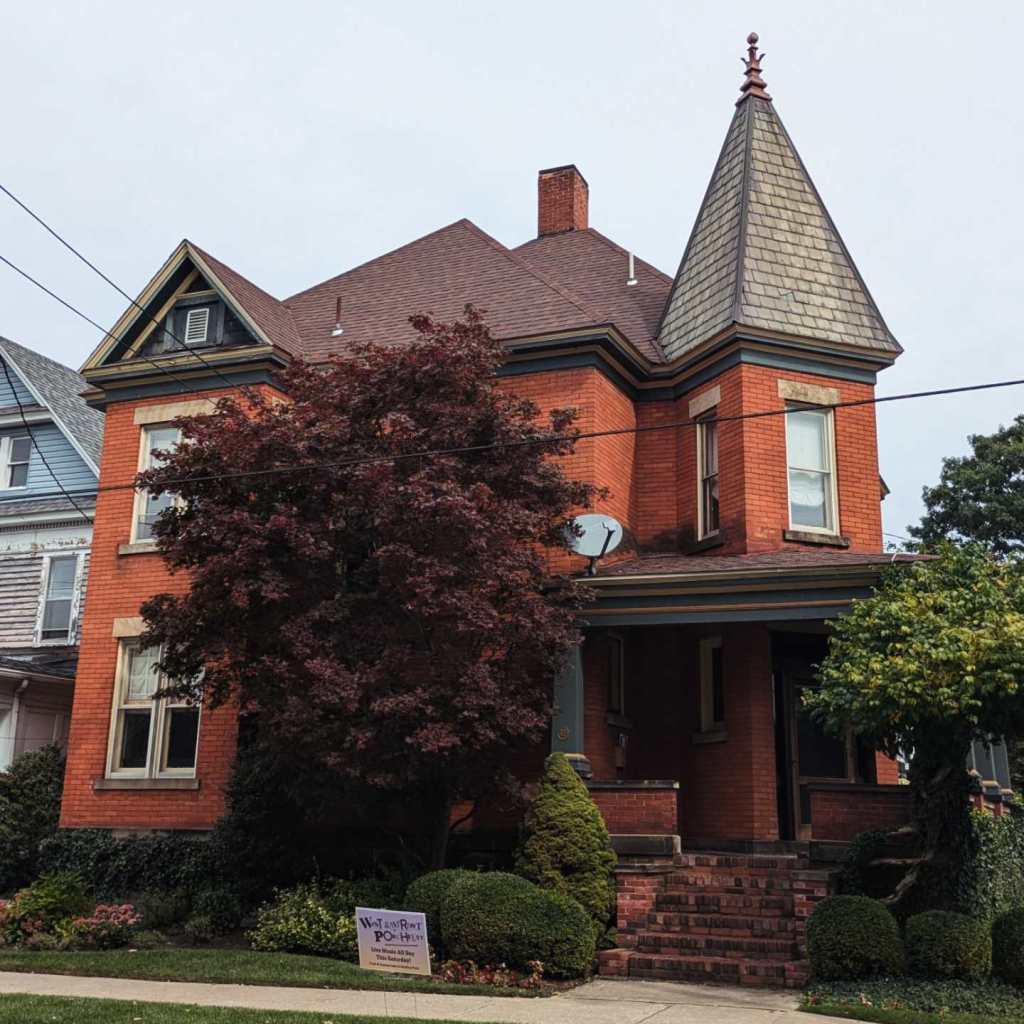

This home has had a LOT of occupants throughout its existence. No one really stayed for long until Walter Wicker.

Built in 1898, one of the first occupants of this house was Ms. Effie G. Johnson. Effie was a spinster and a stenographer at the courthouse for years before she took a job with the William Hayes Company (see William Forster entry above) as a typist. She finished out her career as secretary of the board of health. She moved after about 12 years to 406 W. 4th, where she died. That home has since been torn down. Effie seemed very well loved in the Erie area.

Mr. Walter Wicker was a son of the American Revolution (his great-great grandfather Luther Wicker was born in 1758 in Massachusetts and served in both 1777 and 1779 in the American Revolution and his great-great-great-great grandfather, William Wicker, was on board the Mayflower). Walter served in World War II. He worked for the Lyman Felheim company at 20th and Holland and was super into playing Bridge. His wife, Elinor Bauschard Wicker and was an Erie teacher (taught at Wilson, Strong Vincent, and Wesleyville) and was active in the Woman’s Club, Church of the Covenant, League of Women Voters, and Sarah Reed Children’s home. Elinor died in April of 1969 and Walter died the following December.

Then west on 7th to:

613 W. 7th St. – The Miller House (This home is not hosting a band in 2025)
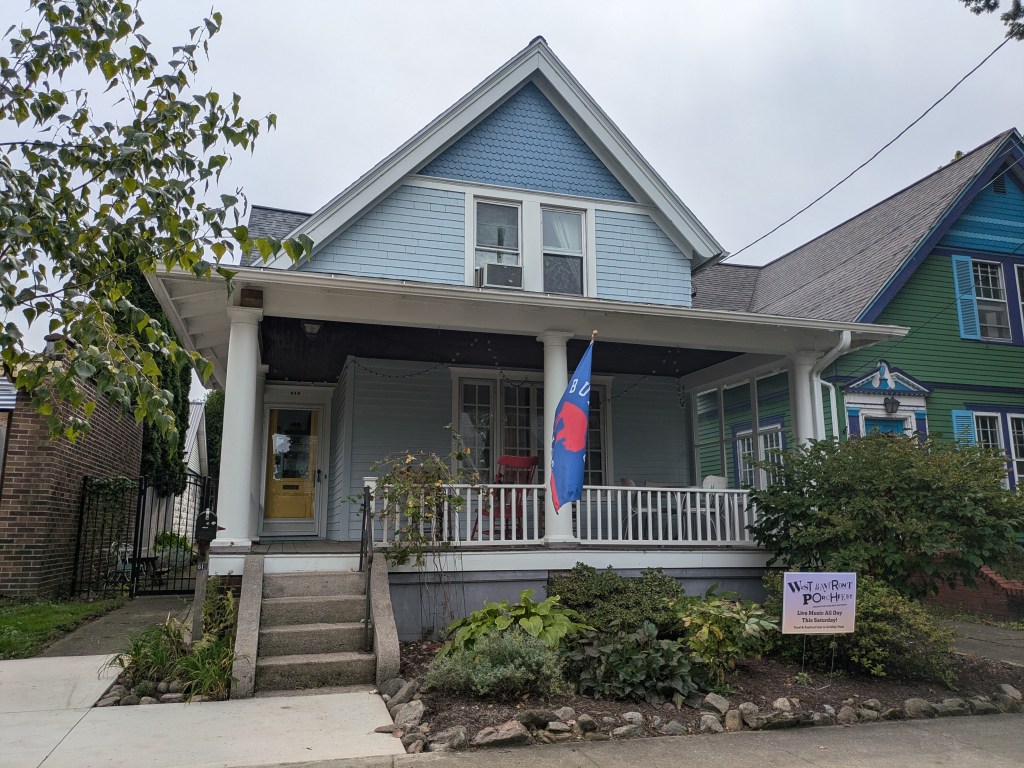
This home was built in 1886 and was originally built as a rental property (I believe by James Baldwin – who eventually developed Garden Court across the street). The 1890 census was destroyed in a fire in the archives in Washington D.C. so access to early census information is impossible, but from newspaper archives I know one of the first occupants of the home was the widow Augusta Miller and her two daughters Emma and Etta. Augusta was married to Charles Mueller/Miller who was a literal flour miller by trade. They had two sons, Charles and Gustave who were both shopkeepers. Gustave was successful and Charles made some poor financial decisions and wound up committing suicide, leaving a wife and young son. After Augusta was widowed she and her daughters moved into 613 W. 7th. Emma was a schoolteacher and eventually a principal. Neither daughter ever married, and after Augusta’s death they moved just down the street to 544 W. 7th St. and the sisters lived with a female boarder named Elizabeth Duncan (a nurse) for decades. It is my assumption that Emma and/or Etta were part of Erie’s early LGBTQIA+ community.

Then west on 7th to:
657 W. 7th St. (In 2025: Hosting Mark and Bushan at 4 p.m.)
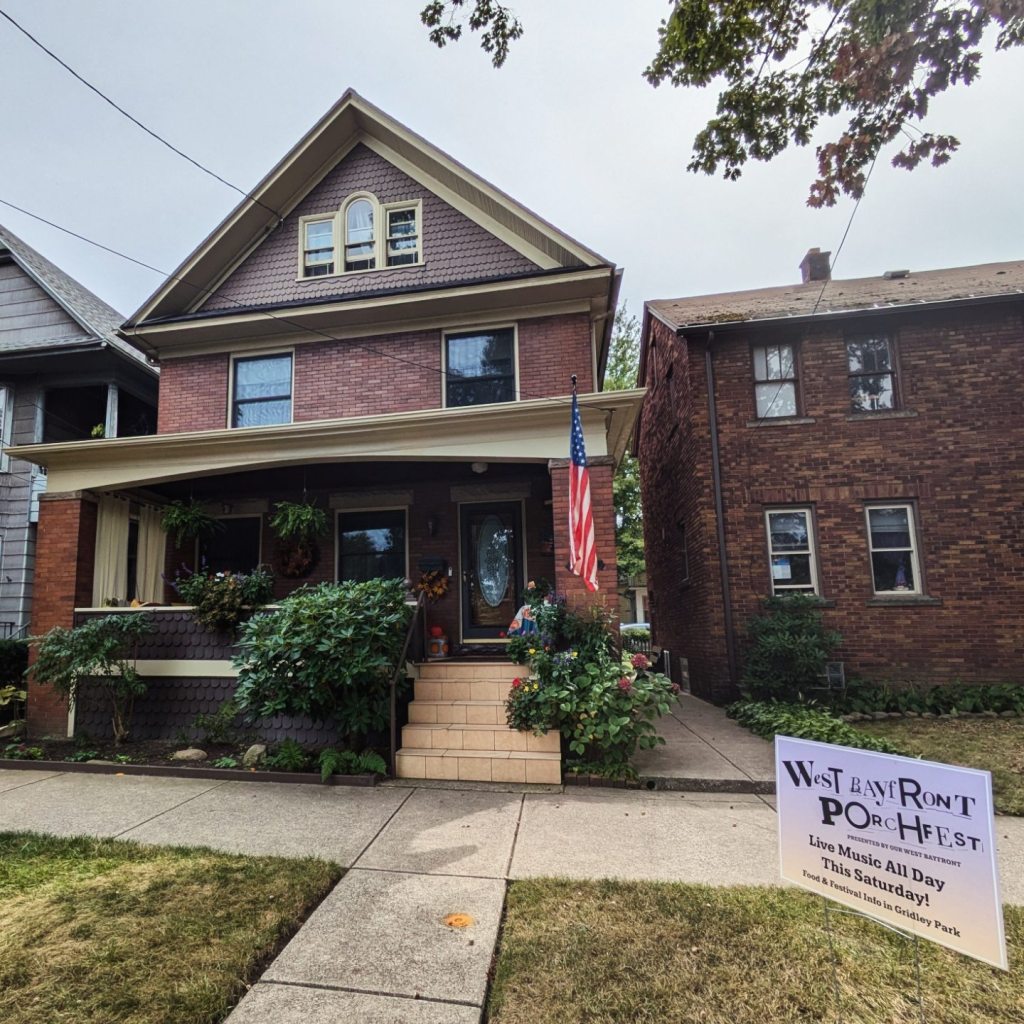

This home was built in 1912 and was originally owned by Dr. and Mrs. (Mary) Noble Chauncey Campbell. Dr. Noble Campbell was born in 1874 in North East and became a dentist. The couple lived in this house for the majority of its early history and the home hasn’t changed hands but three times in its entire history. Noble died in 1943 and Mary continued living in the home until her own death in 1967. Noble’s grandfather was a son of the American Revolution, born in Vermont and moved to North East to farm. Noble was born on that farm. He eventually went to dentistry school at UPenn in Philadelphia. Dr. Campbell’s office was located at 18th and Peach. He and Mary never had any children. He was a charter member of the Zem Zems, the Lawrence Lodge, the Sons of the American Revolution, and the Church of the Covenant.

This house, and neighborhood, has been steadfastly cared for by current occupants Pat and Tom Alterton and Pat’s gloriously talented green thumb is responsible for the construction and maintenance of the central garden and planters within Gridley Park. 

From here, riders can head back to Gridley Park to regroup, figure out their route, refuel with some libations from our friends at Erie Ale Works or from some of the local food vendors on hand. If you’ve enjoyed this ride, consider making a donation to Our West Bayfront to continue having events like Porch Fest! And share this route with the friends you meet in the neighborhood!

Home Again in the OWB Inaugural Architectural Bike Ride 2021

This was the first historic bike ride I ever hosted/wrote and it was done as a part of Our West Bayfront‘s West Baywalk program, which sponsored themed walks throughout the neighborhood (especially during the pandemic), encouraging neighbors (as well as people from outside the area) to learn a little bit more about their city.

This bike ride was created in a collaboration between Preservation Erie and Our West Bayfront and focused on learning about different architectural styles through observation of the homes in the neighborhood. This can be done as a long walk or a bike ride – I’ll post a map and you can choose your mode of transportation (I’ll also post directions between photos). I would strongly recommend not driving, however. You see and learn so much more moving at a human speed.

I’d love for you to enjoy and learn from the information provided – but please don’t use this information for personal or business profit. History can and should be free for everyone!
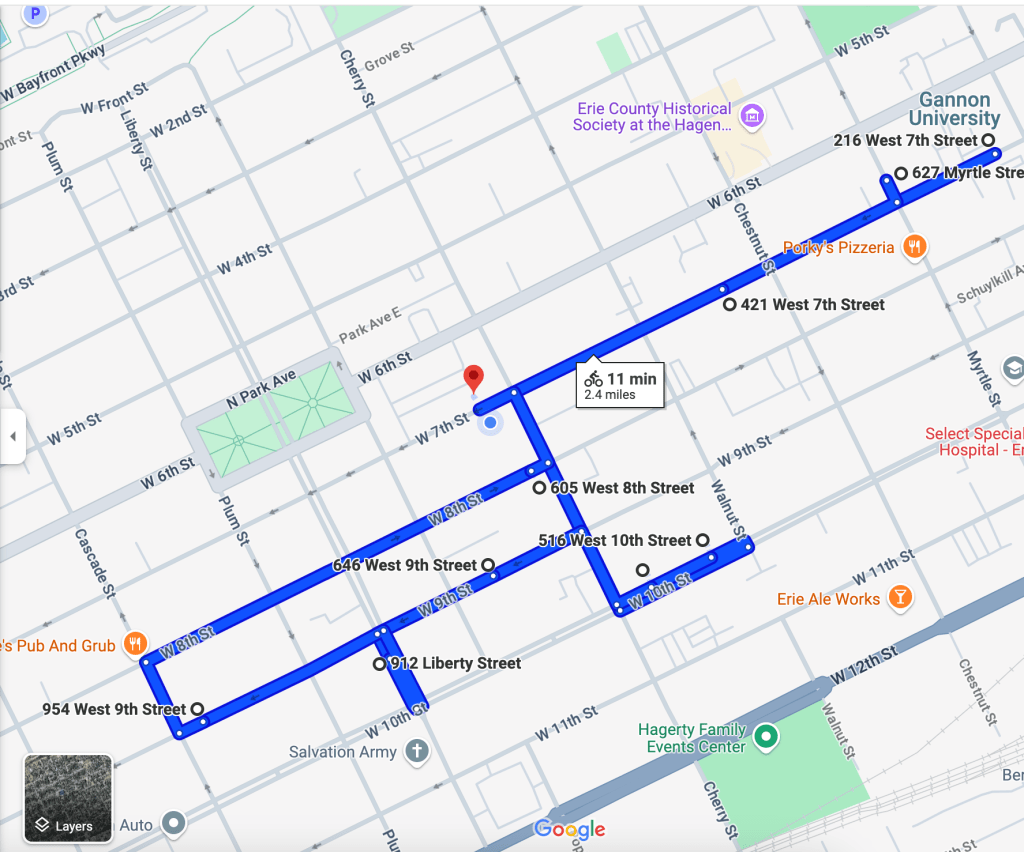
If you click the photo, it will take you to the link for this Google map. This map shows the basic route for the Home Again in the OWB 2021 Bike Ride, minus the first stop which has since been demolished. I’ve included the information on that home below, but did not include it in the ride because that’s sad.

Generally, we start the Our West Bayfront Rides from Gridley Park, as it is a good meet up spot. If you’re doing this ride/walk on your own, you can start at the first extant structure which will be 216 W. 7th Street (but that will also be changing soon). I’ll include the first stop we made in 2021 (which has since been demolished).

216 West 4th Street // The Moses and Matilda Koch House

Date of Construction: 1874

Architectural Style: Second Empire

Defining Architectural characteristics: The main feature of a Second Empire home is the Mansard Roof (a four-sided gambrel roof with a shallow or flat top usually pierced by dormer windows), but also the pavilion around the door and upper window (which is a segment of the facade that is different in height or ornamentation than the rest of the building), and the massing (how large the building appears).

History: This was once the home of Moses and Matilda Koch. Moses owned “one of the largest and finest clothing stores” in town within the “Scott Block” on 7th and State with his brother, Jacob Koch. After Matilda’s death in 1897, her daughter and son continued to live in the home until the early 1930s. Once the daughter died (who had no children), the home became apartments.

Update: Demolished in October of 2022

From here, head south on Sassafras Street to Seventh and make a right.

216 West 7th Street // The Olds Norman House

Date of Construction: 1874

Architectural Style: Queen Anne Victorian

Defining Architectural Characteristics: Asymmetrical facade, square tower, a large pedimented porch, different wall textures including shingles and brick, spindle work, bay windows, monumental chimneys, and slate roof.  Note: the striking original carriage house (note in 2024: the carriage house has been deconstructed for materials reuse).

History: This home was built by Clark Olds, a successful attorney who was also once the owner of the Park Opera House on North Park Row.  It became the long-time home of photographer Ron Norman, who owned the home until September of 2020 when it was purchased by Tom Hagen/Historic Preservation Trust for rehabilitation.

Update: The plan for this home is to move it 180 degrees to the north and have it facing W. 6th Street where Wehrle Hall sits currently. Once Wehrle is demolished – this home will have a new address.

From here, we’ll head around the corner, north half a block on Myrtle.

627 Myrtle Street // The Wingerter Kirk House

Date of Construction: 1920

Architectural Style: Craftsman

Defining Architectural Characteristics: Low pitched roofline, deeply overhanging eaves, exposed rafter tails under the eaves, wide front porch, tapered square columns supporting porch roof, earth tones (especially on roof), stone work (in this case, river stone) and mixed materials throughout.

History: This is Gannon’s Kirk house.  Kirk is the Scottish word for Church, making this home the “Church House,” providing living quarters for religiously committed Gannon students.  The home was originally occupied by G.B. Wingerter, owner of Wingerter and Sons, a successful tobacconist and cigar maker in Erie on Turnpike Street.

From here, continue west on Seventh Street.

421 West 7th Street // The Derry House

Date of Construction: 1896

Architectural Style: American Foursquare

Defining Architectural Characteristics: Pyramidal roof, boxy design, center dormer (often on all four sides), large front porch.  This home also features “clinker bricks.”  Clinkers were the result of bricks being kept too close to the heat source in the kiln.  Their appearance is darker and less uniform in color, and the brick shape is often irregular.  The term “clinker” refers to the sound these make when banging together. 

History: The home was originally occupied by the Derry Family. Ed Derry incorporated the Penn Art Steel Company which made steel products for office, hospital, and hotel use (like wastebaskets). 

Turn back east (on the sidewalk – Seventh is one way headed west) and turn south onto Chestnut. Take Chestnut to 10th and turn right.

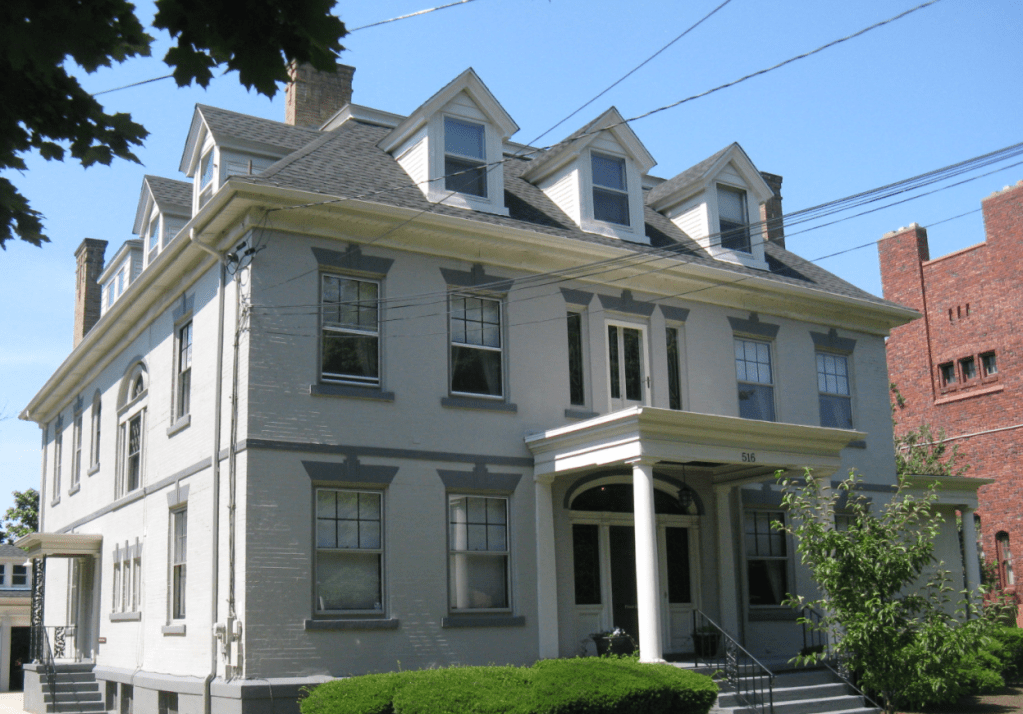
516 West 10th Street // The Davis Illig House


Date of Construction: 1901

Architectural Style: Georgian Revival

Defining Architectural Characteristics: Symmetrical form, multi-pane windows, hipped roof, transom window over paneled front door, pilasters at front entry, window pediments, multiple dormers, symmetrical chimneys.

History: Originally occupied by the E.A. Davis family. Edwin A. Davis was a successful State Street merchant (814 State – the MOST Erie address ever), selling wallpaper, fixtures, shades, etc.  Around 1925, it became the home of William Illig, whose father, Daniel Illig, a tailor and men’s clothing store owner, built the grand Second Empire home at 21st and Peach (that is now 1020 at the Bastion).  William Illig was a lawyer and one of the founding partners of MacDonald, Illig, Jones and Britton Law Firm.

Continue west on 10th Street

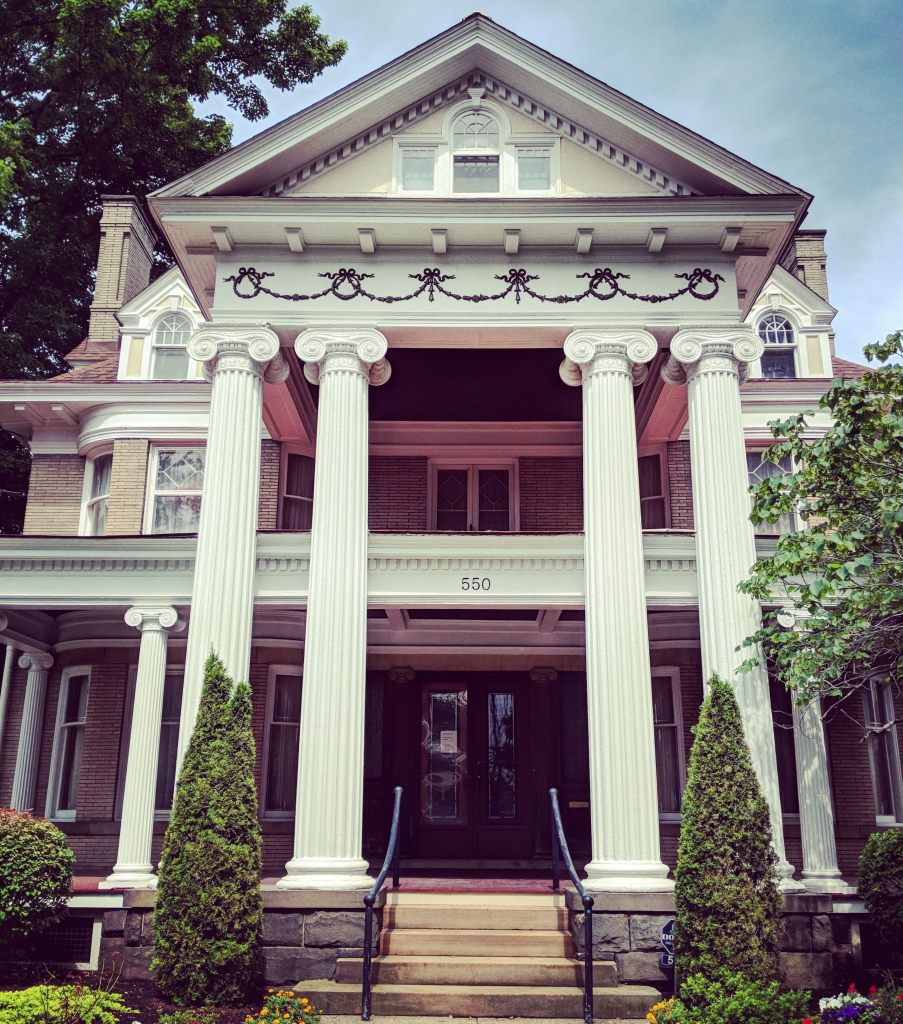
550 West 10th Street // The Schabacker House

Date of Construction: 1901

Architectural Style: Greek Revival

Defining Architectural Characteristics: Symmetrical shape, prominent columns, porch entry, decorative cornices and friezes. Note the gable turned to face the street, which is an aspect reminiscent of a Greek Temple.

History: This was once the home of Martin and Lydia Schabacker.  Martin was a wholesale fruit and vegetable dealer, who ran his store “People’s Grocery” at 15th and State and later at 18th and Wayne.

Continue west on 10th then head north on Cherry and take a left onto West 9th

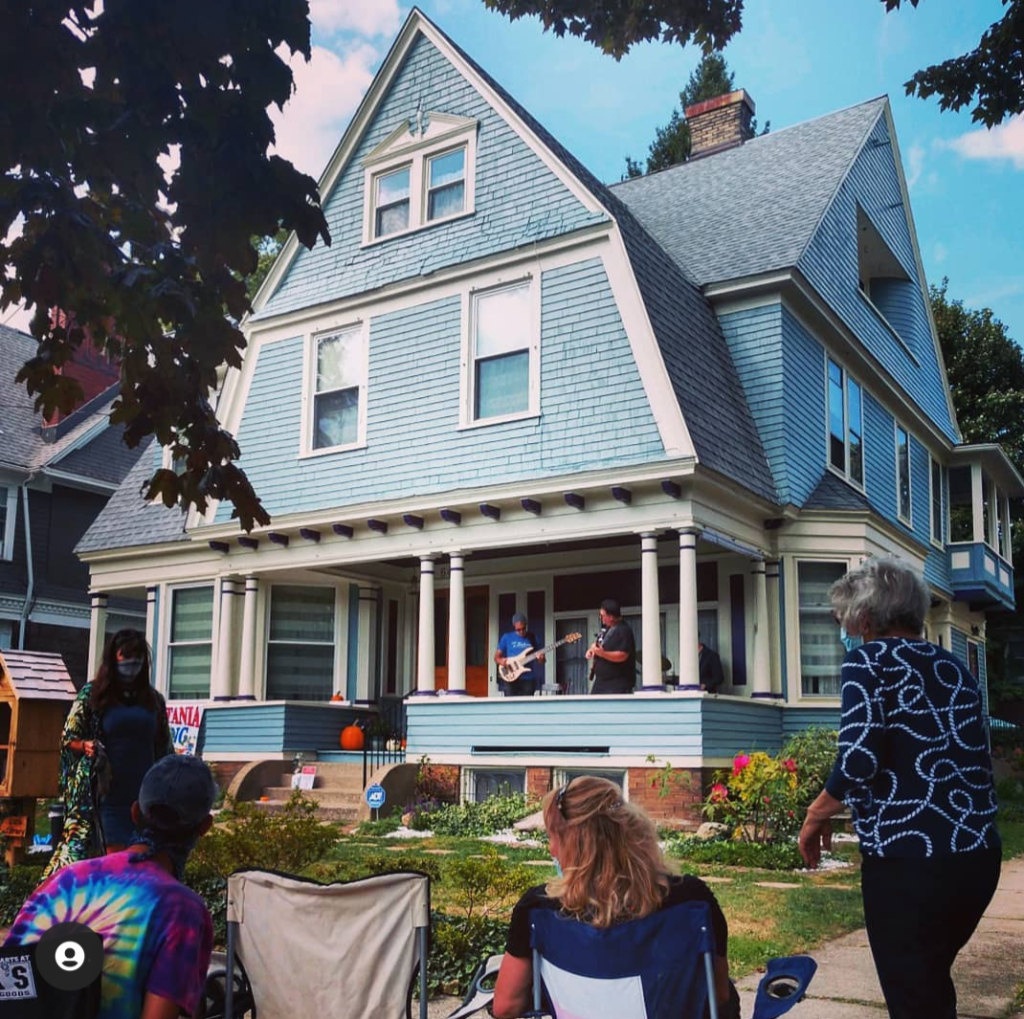
646 West 9th Street // The Jones Siegel House

Date of Construction: 1895

Architectural Style: Shingle Style

Defining Architectural Characteristics: wood cladding, asymmetry, large, imposing shapes and massing (how large the home appears), gambrel roofs with multiple gables, multiple verandas and porches, cedar shake shingling. 

History: This home was originally occupied by Jesse Supplee, a civil engineer and building inspector for the City of Erie. Eventually the home was purchased by the daughter of Col. Percy Lancelot Jones, who was a U.S. Army Physician as well as the superintendent of Hamot Hospital in the 1930s, and was instrumental in the invention of the ambulance. Elizabeth Jones Siegel and her husband Charles Siegel, who was part of the J.F. Siegel Co. (coal and oil), lived in the home for the bulk of its existence, until 2007. Elizabeth died in 2010 at age 94.

Continue west to Liberty Street and make a left

912 Liberty Street // The Mayo House

Date of Construction: 1908

Architectural Style: Tudor Revival

Defining Architectural Characteristics: Half timbering, stucco exterior, steeply pitched roof with multiple asymmetrical gables, overhanging second story above a front porch, earth tones.

History: The original occupant was M.G. Mayo, who owned a luggage shop at 709 State Street and was a popular basketball player at the YMCA.

Head north back to Ninth Street and turn left/west

954 West 9th Street // The Wheeler Armstrong House (C. Paxton Cody)

This home has since received a new coat of paint and is a handsome sand/coral combination.

Date of Construction: 1901

Architectural Style: Combination of Styles: Folk Victorian/American Foursquare designed by architect C. Paxton Cody

Defining Architectural Characteristics: Folk Victorian aspects: clapboard siding, front porch, two bay facade, intricate carvings.  American Foursquare aspects: square, two and a half story construction, with centered dormers on all four sides. 

History: This home was included on the walk to give an example of a well-known architect’s work in Erie.  C. Paxton Cody designed a number of homes and buildings in Erie around the turn of the 20th Century.  Some of his most well known designs are the number of Craftsman Style homes he built on Lincoln Avenue.  He also designed homes and buildings in Pittsburgh and Cleveland and was the president of the PA State Association of Architects.  In this neighborhood, he also designed the church (turned apartments) just south of 9th Street on Liberty (directly next door to the Tudor Revival example).

This was once the home of Jessie Wheeler and Edwin Armstrong. Jessie was a prominent high school teacher in Erie who was integral in the creation of the first PTA in Erie. She resigned amidst a bit of a scandal, as she demanded higher pay and if she didn’t receive it, she offered her resignation. Edwin was a proprietor of Ball Engine Works.

To avoid biking on 8th Street (danger danger), you can head back up to 10th Street, head east to Cherry and go north on Cherry to 8th.

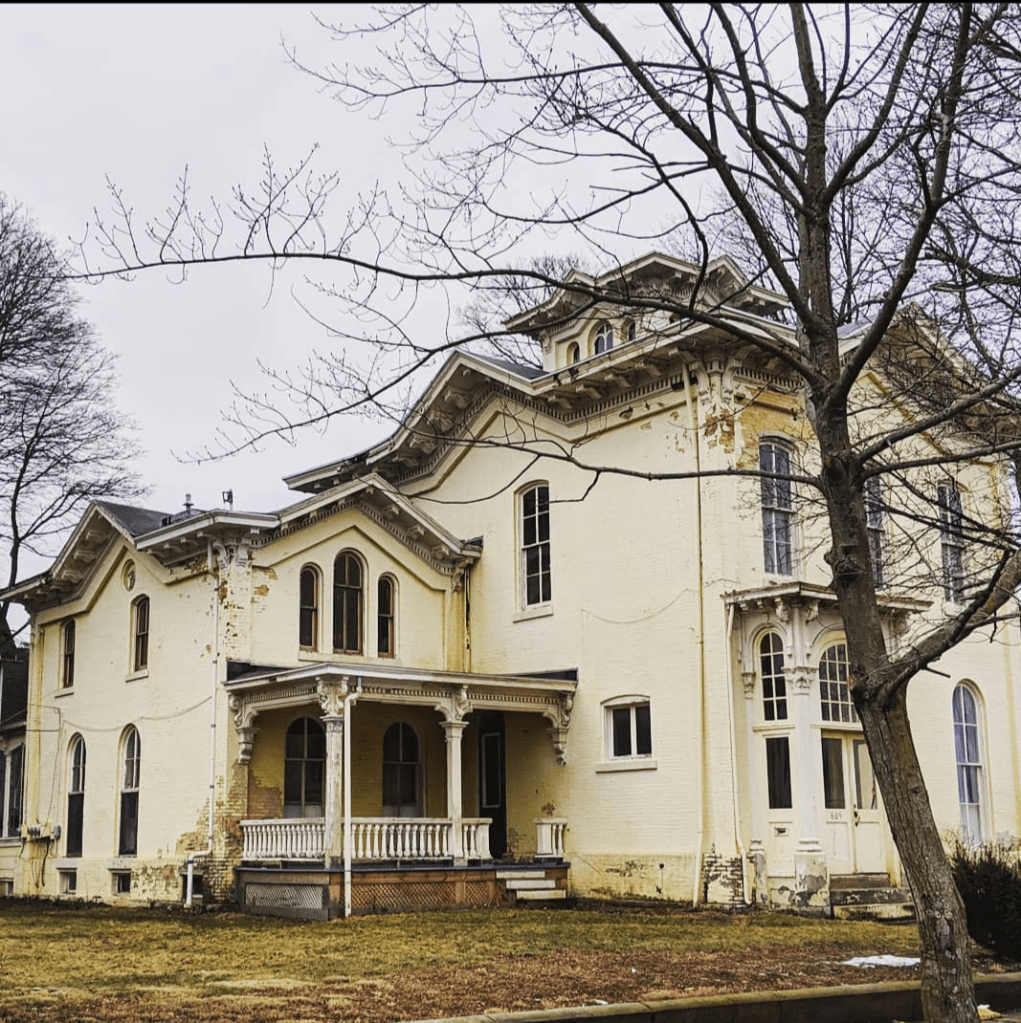
605 West 8th Street // The Thayer-Thompson House

This home has since been purchased by the Erie Historic Preservation Trust/Tom Hagen and has been stripped of paint to reveal the beautiful, orange brick beneath.

Date of Construction: 1863

Architectural Style: Italianate

Defining Architectural Characteristics: low pitched roof, balanced symmetrical rectangular shape, wide overhanging eaves with large brackets or cornices, a square cupola (topper), arched windows, ornamented portico (doorway), window pediments.

History: This home is known as the Thayer-Thompson House and is listed on the National Register of Historic Places.  The home’s namesakes: Oscar Thayer and Victory Thompson were both in the oil refinery business and built their wealth through the black gold of Titusville.  Thompson ran the Erie City Oil Works, which was eventually purchased by Thayer, which he then sold to the Standard Oil Company. 

From here, head north on Cherry to 7th and make a left. This is our last stop.

614 West 7th Street // The Osborne House

Date of Construction: 1908

Architectural Style: Dutch Colonial

Defining Architectural Characteristics: The most defining characteristic of a Dutch Colonial is it’s Gambrel Roof, having curved edges and spanning the length of the house.  Two chimneys on either end, wood frame with cedar shake siding. (note the “clinker bricks” comprising the eastern chimney – we just learned about those!)

History: This home resides at the Southeast entrance to Garden Court, Erie’s first planned subdivision which has 27 homes all built around a shared interior courtyard. In 1906, the property of this city block was purchased and planned out by James Baldwin, and the homes on the block were built between 1908-1930.  This home, the Osborne House, was among the first built in this subdivision. A.B. Osborne was a prominent attorney.

3528 Sassafras St. // The Wallace Knox Meyer House

The home at 3528 Sassafras Street is one of the oldest homes in the city of Erie and was built at a time when it would have been located at the far edge of the southern portion of the city, and was at the time within the border of Millcreek Township. The original portion of the home was built in 1834 and was the farmhouse of the Wallace and Knox families. David Wallace (1767-1852) was a sheriff and coroner for Erie County, but was, as is demonstrated by the amount of land he owned, also a farmer.

In an Erie Times News article from 1958, then owner of the home Mrs. Martha Gifford was interviewed about the history of the home. She stated within that interview, “The melon patch once occupied the place where the WICU television station now stands, and the Jefferson school is in the pasture.”

David Wallace lived a long life at the homestead, dying at age 85. He lived in the home up until his death and willed the home and property to his son-in-law/nephew Robert Wallace Knox and daughter Eliza. The ancestry information is lacking for Robert Wallace Knox, but the home appears to have stayed within this extended family for generations.

This historic 1855 Erie County (ancestortracks.com) map shows the property belonging to Knox at plot 68 in what was then considered Millcreek Township.

The home seems to have left the Wallace Knox families in the 1920s when parcels of the property were subdivided, sold off, and became the planned community of Glenwood Hills. The home itself was purchased by the Meyer (Otto Meyer and Elizabeth Bennett Meyer) family who lived there until the late 1940s. Otto Meyer was the son of P A Meyer who ran a successful clothing business (P A Meyer and Sons) nearby the eventual Warner Theatre. His father, Polydor A. Meyer, an immigrant from Prussia, began the business in 1884 and originally sold men’s, boy’s, and children’s clothing. 

From about 1950 until the 1980s the home was occupied by the Gifford family (David S. and Martha). David was a highly successful attorney who graduated from Central High School in Erie and went on to graduate from Harvard. He was a son of the American Revolution and was deeply involved in civic life in Erie.

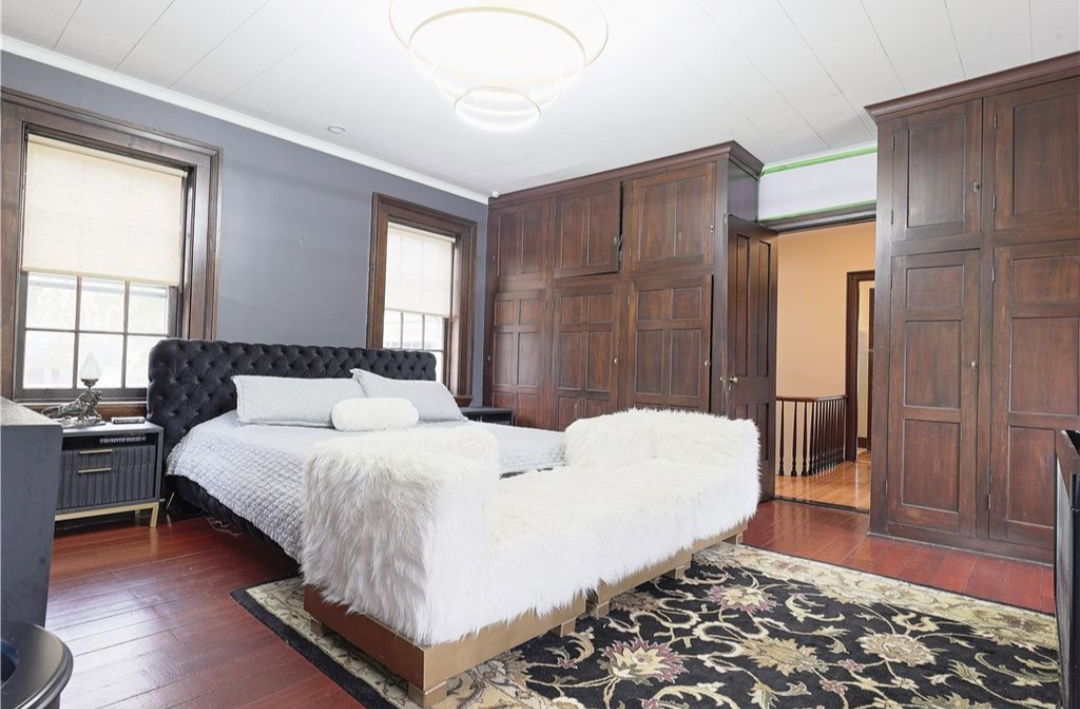
In that same article quoted earlier in this text, in which Mrs. Gifford was interviewed, the interior of the home was described, “All of the woodwork is of native woods, cut from the farmlands. Most of it is black walnut carefully cut to show burl and fine grain. The doors are made in so-called ‘Christian’ pattern: the paneling forming a cross above and an open bible below. Doorways and window frames are fashioned like keyholes. Originally, there were seven fireplaces, but three have been covered over as alterations were made.  There’s a commanding view of the lake from the upstairs bedroom – probably the reason the house was faced in this direction.”

This article in which the history and interior of the home at 3528 Sassafras are discussed with then-owner Martha Gifford appeared in the July 13, 1958 edition of the Erie Times News.

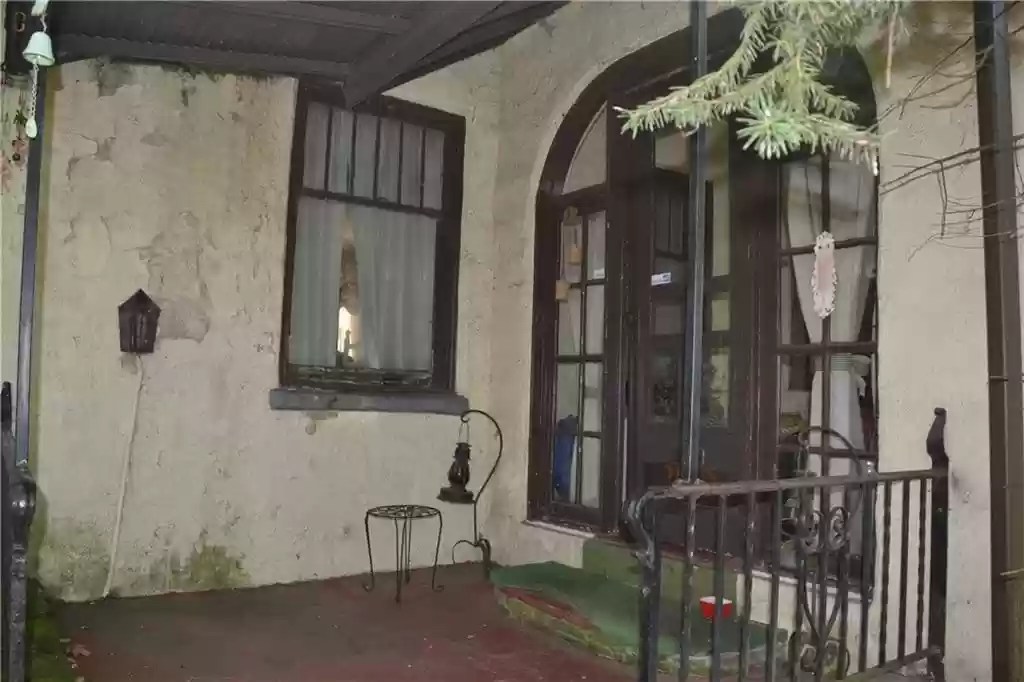
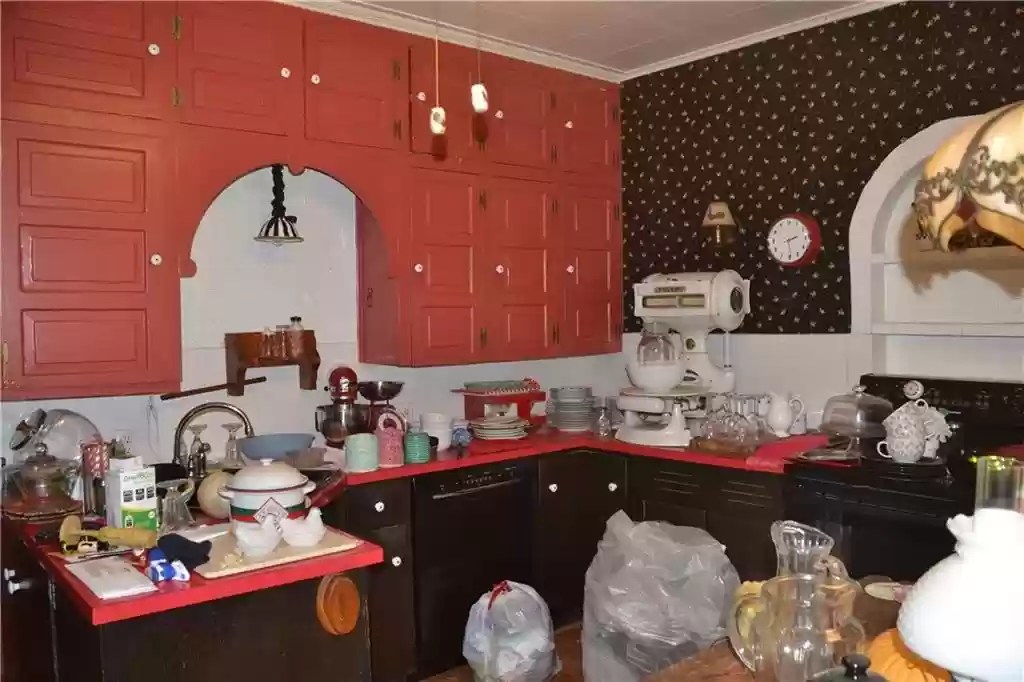
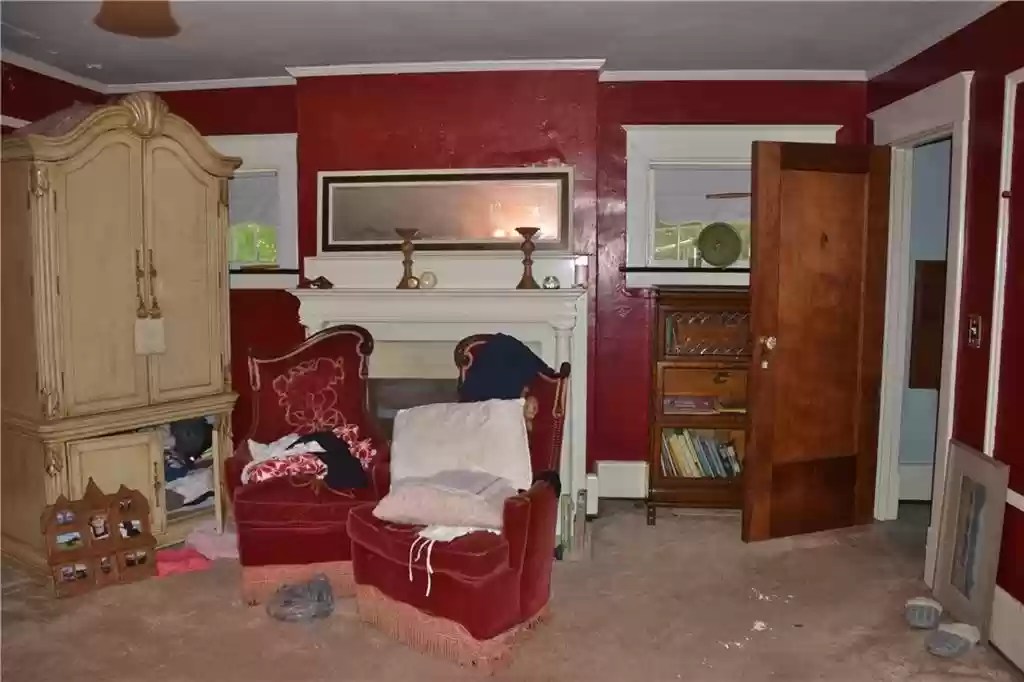
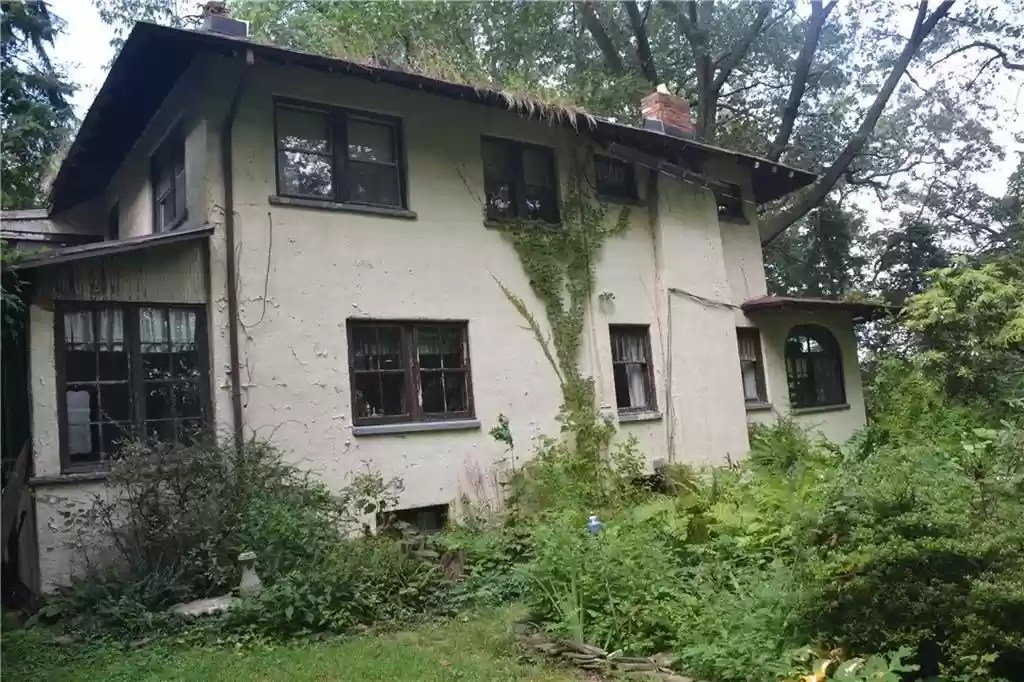
The home was purchased by Virgina Boyer in 1985 who lived there until 2003 when it was sold to the Kidder family. It was sold again in 2014 and in 2018. The 3,440 square foot home is for sale now through Marsha Marsh and is listed for $374,500. The following photographs are from the listing. 

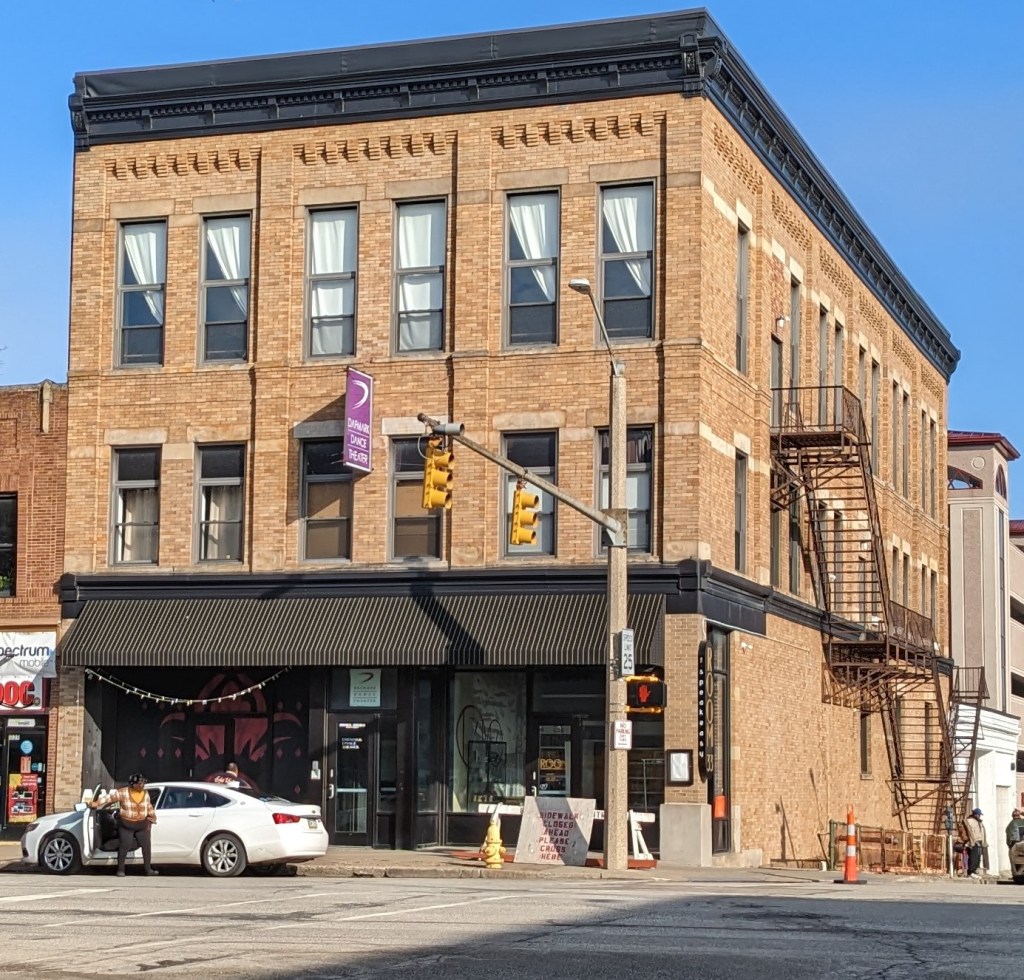
1031/33 State Street :: The Lincoln Building

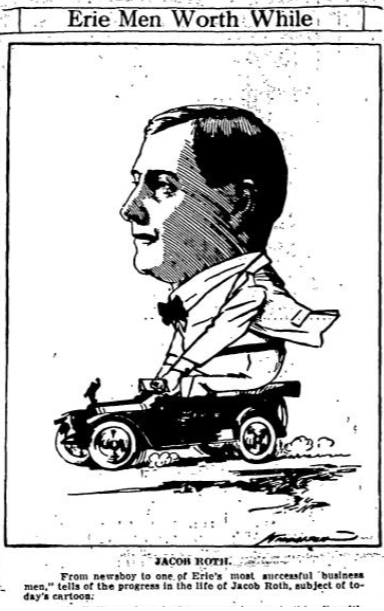
The Lincoln Building, constructed around 1905 by Jacob Roth, has housed a number of businesses over the years. The upper floor, however has almost always been a dance hall/dance studio and remains so today as Dafmark Dance Theater.

The building on the northeast corner of 11th and State was built around 1905 by local entrepreneur, Jacob Roth. This building was constructed around the same time as a number of other buildings in this section of downtown Erie by the same man including: the Roth building (only ever described as being on the North side of State St between 11th and 12th), the Cadillac building (1117-1119 State), and the Union building (unknown location).

Jacob Roth was born in Germany in 1872 and came to Erie with his parents when he was 8 years old. He attended public schools, and at the age of 12 began selling newspapers to help support his family. According to a profile printed in the July 14th, 1915 issue of the Erie Times News, “He took up a newspaper station at the depot and besides selling on the platform, he delivered papers to all parts of the city. In the sale of papers, his business ability became noticeable, for he soon earned the sum of $15 and $18 weekly.”

From the July 14, 1915 Erie Times News

He saved the money that he did not give to his family, and established himself in the bicycle business. Eventually, he became one of the first owners of an automobile in Erie and the rest, as they say, is history.

Roth purchased the building at 1117-1119 State street and named it the “Cadillac Building,” (which is now the parking lot for the credit union on the corner of 12th and State). This was the headquarters of the car dealership for a number of years before eventually moving to East 8th Street.

According to his death notice (April 2, 1949) “Mr. Roth became one of the largest real estate operators in Erie, at one time owning Waldameer Park. As a partner, he owned an interest in the Erie franchise of the Ohio and Pennsylvania baseball leagues.” Roth Cadillac is still in business at 5711 Peach Street (and the dealership is the current steward of a classic 1912 Cadillac that was sold at the original Roth Cadillac at 1117-1119 State Street, which has been restored and is on display at the dealership).

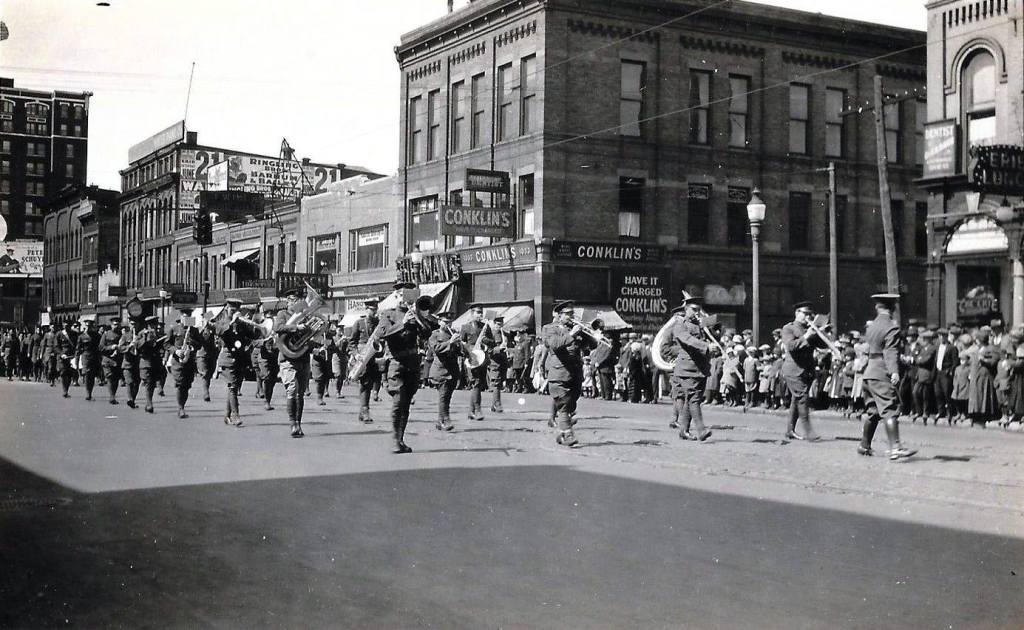
This photo from 1924 shows the the 112th regiment military band marching past the Lincoln Building at 11th and State. At this time, the first floor storefront was occupied by Conklin’s Clothing Store (Source: Erie History and Memorabilia, the original source of the photo was not cited).

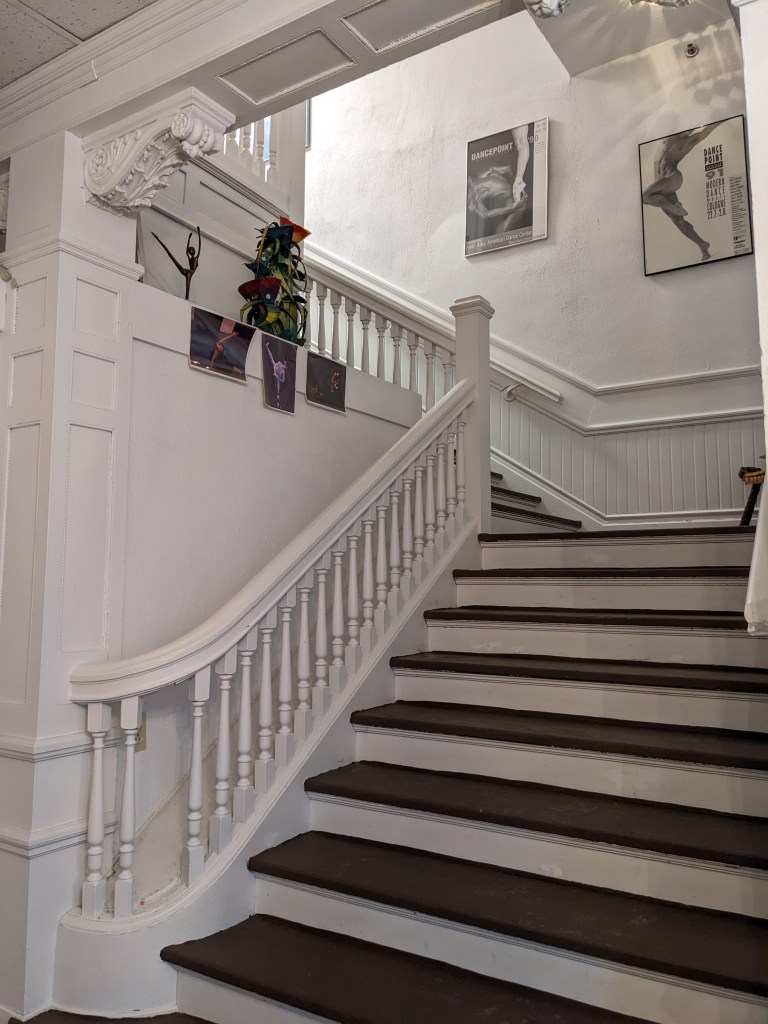
The third floor of the Lincoln building has always held some kind of dance or assembly hall, since its construction. The grand staircase and performance space on the 3rd floor lends itself to such activities (including Miss Luce’s Dance Academy from the early 1930s until the 1960s, as well as Mark Moffett’s Lincoln Theater – a live theater group in the 1980s). The building suffered a fire in 1909, shortly after it’s construction causing approximately $5000 in damage (about $160,000 today). The lower floors of the building have contained MANY businesses over the years, including the Columbia Phonograph company, a wallpaper company, The Business Men’s Exchange, Dr. Koehler’s dental offices, Producer’s Oil and Gas, Froess Brother’s Pianos, The Gallaher Tailoring Company, a pool hall, and multiple restaurants and bars (to name a few).

Dafmark Dance Theater has occupied the 3rd floor of the Lincoln building since it’s creation in 1990. This photo shows the historic grand staircase leading up to the open performance studio on the 3rd floor.

Since 1990, Dafmark Dance Theater has occupied the third floor studio space for it’s performances and lessons. The space still holds on to a number of historic architectural elements including this grand staircase with intricate woodwork, the wood floors of the performance space, tall windows, fire escapes, and a narrow back staircase in dressing areas. The first floor currently houses a “prohibition era” themed speakeasy, Room 33 (a nod to the address of the building), which seems a fitting tenant for the historic building.

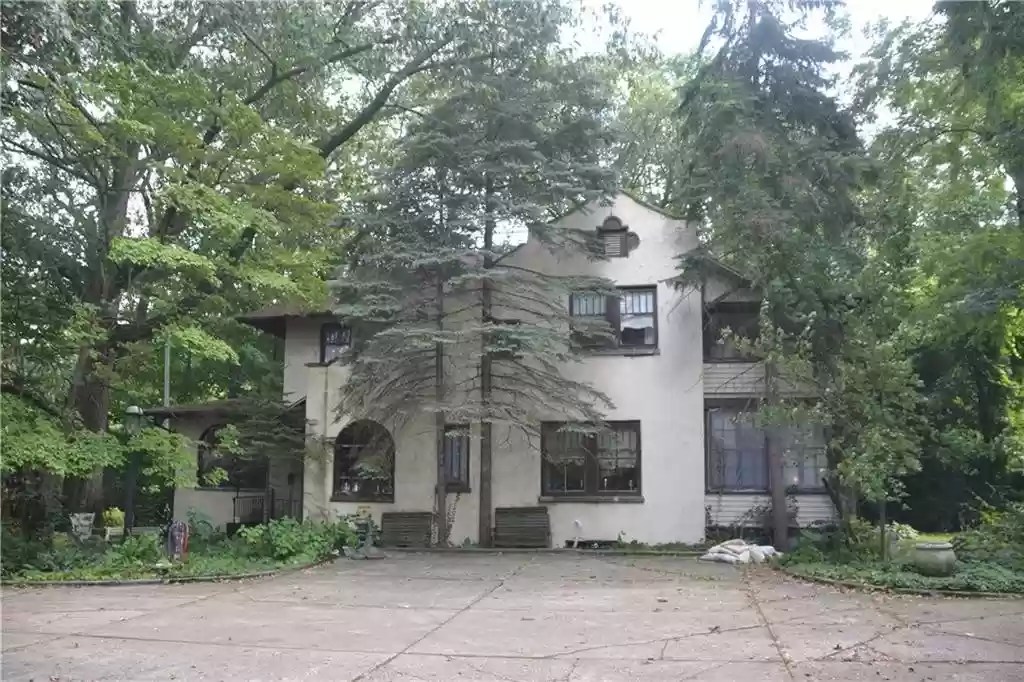
3102 Glenwood Park Ave :: The Ehler Benedict-Miller House

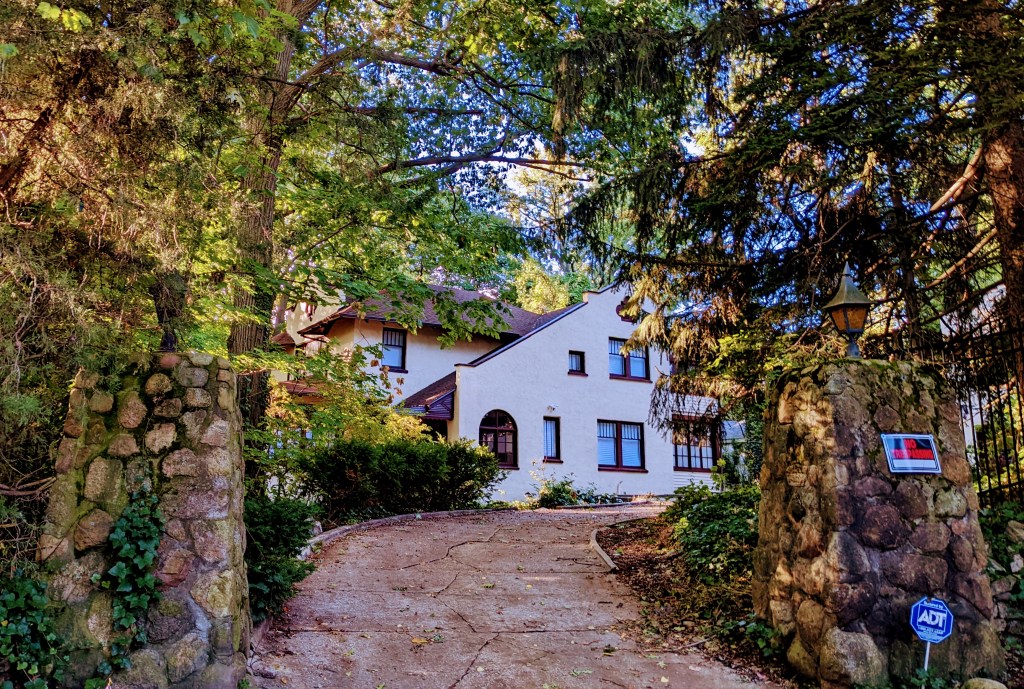
While the address for this home is 3102 Glenwood Park Avenue, the home itself is merely visible from Glenwood Park Ave, perched up on the bluff, surrounded by woods, it is in one of the most unique spots in the city. It is actually more accessible from Kellogg Street, rounding out the dead end street there. The house was built in a Spanish Colonial style, retaining its original windows, wood eaves, and stucco exterior.

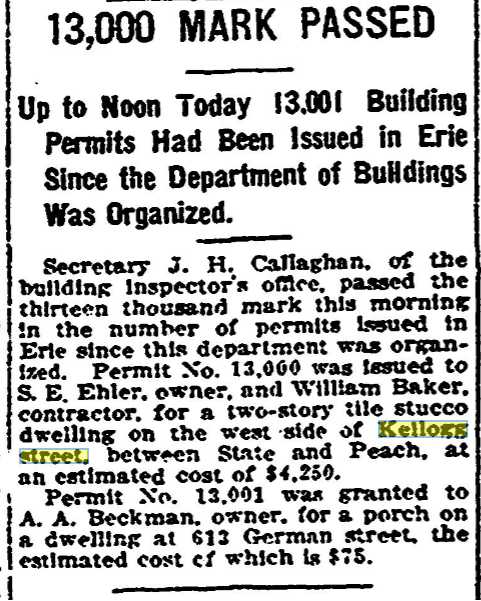
The permit for the building at 3102 Glenwood Park Avenue was issued to S.E. Ehler (Sarah E. Hawkey Ehler) on September 16, 1912 and was the 13,000th building permit issued within the City of Erie. It is interesting that the permit was issued to Sarah and not her husband, Carl, and the reason for that is unknown. Sarah’s father was an engineer in Salamanca NY and his parents immigrated to the area from England. Sarah grew up in Chautauqua NY and married her husband, Carl, in 1894. Carl was a traveling salesman. They lived in the home from approximately 1913 until Carl’s death in 1924.

Erie Times News September 1912

At that point, the home was purchased by Ralph Wellington Benedict and his wife Beatrice. They had one child, Jeanne. Ralph was a Real Estate agent and ran his business out of the home at 3102 Glenwood Park Ave. The couple divorced shortly after moving into the home and Beatrice remained there until 1971, while Ralph moved to 609 W 10th Street and remarried. Beatrice remarried Robert J. Miller, who was a contractor and also ran his business from the home.

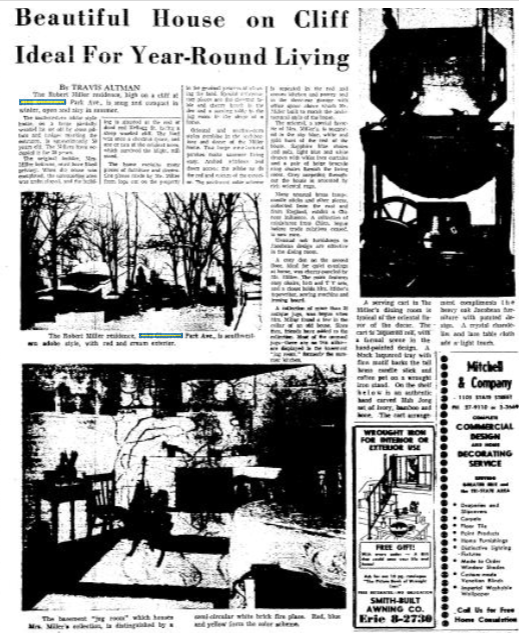
Beatrice lived in the home from 1924 until 1971, for 47 years, and in that time, she did her best to make it truly unique and her own. There were two different articles in the newspaper simply about the home’s character and design, while she was residing there. One that goes into great depth about how it was decorated in an “oriental” (sic) style, and all about her collection of antique jugs she kept in a “jug room” in the basement.

Erie Times News December 21st, 1958. Read the full newspaper article here.

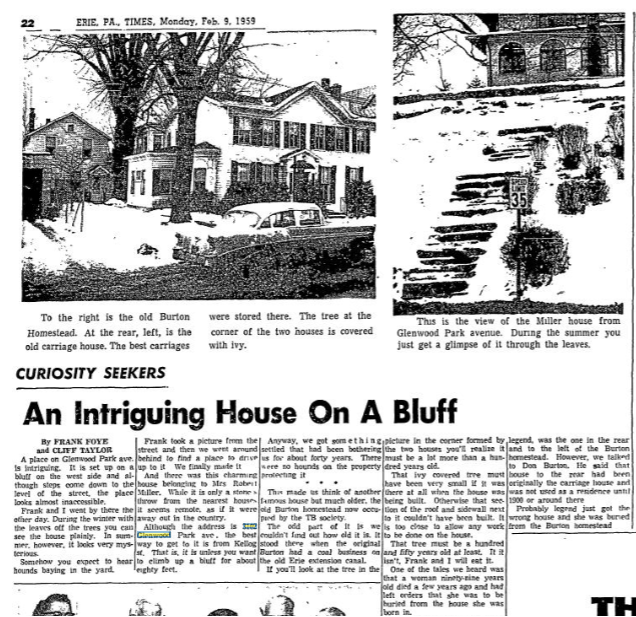
There was also another blurb about the home from an op ed reporter who happened to be wandering around and basically trespassed on Mrs. Miller’s property, although he did note the unique landscape and difficulty of getting to the property. This is from the Erie Times News February 9th, 1959. As you can see from the photo, at one point there were steps leading from Glenwood Park Avenue up to the property, which was much more visible then (and in the winter) than it is today.

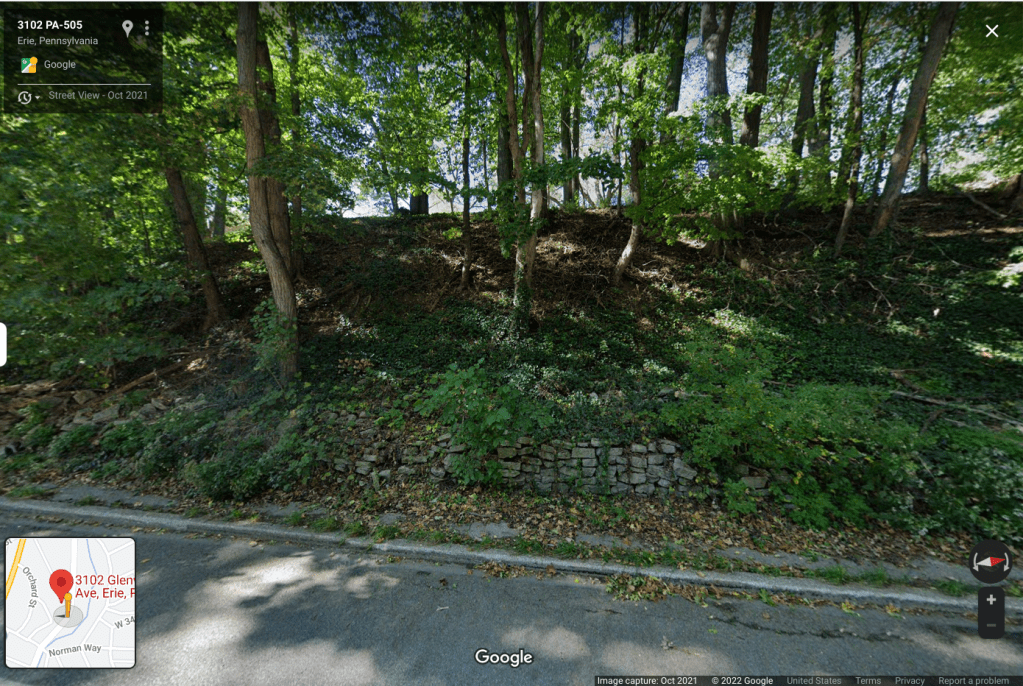
As you can see from the current Google Street view, there is a low stone wall remaining on the Glenwood Park Avenue side of the property, but the steps that were there initially and through at least the 1950s are either gone or no long accessible.

Beatrice lived until 1984 (to the age of 87) but ceased living in the home in 1971, when the property was sold to David Green who was an advertising manager at Union Bank. The remaining recent history is available from the historical card on the tax assessment website and includes Robert and Carol Brotherson in 1977 and Nanci Haibach in 2002.

The home recently sold to an owner who is dedicated to preserving and restoring the original character of the home. Below are some of the photographs from the most recent real estate listing.

251 W 21st St // The Felgemaker-Huff House

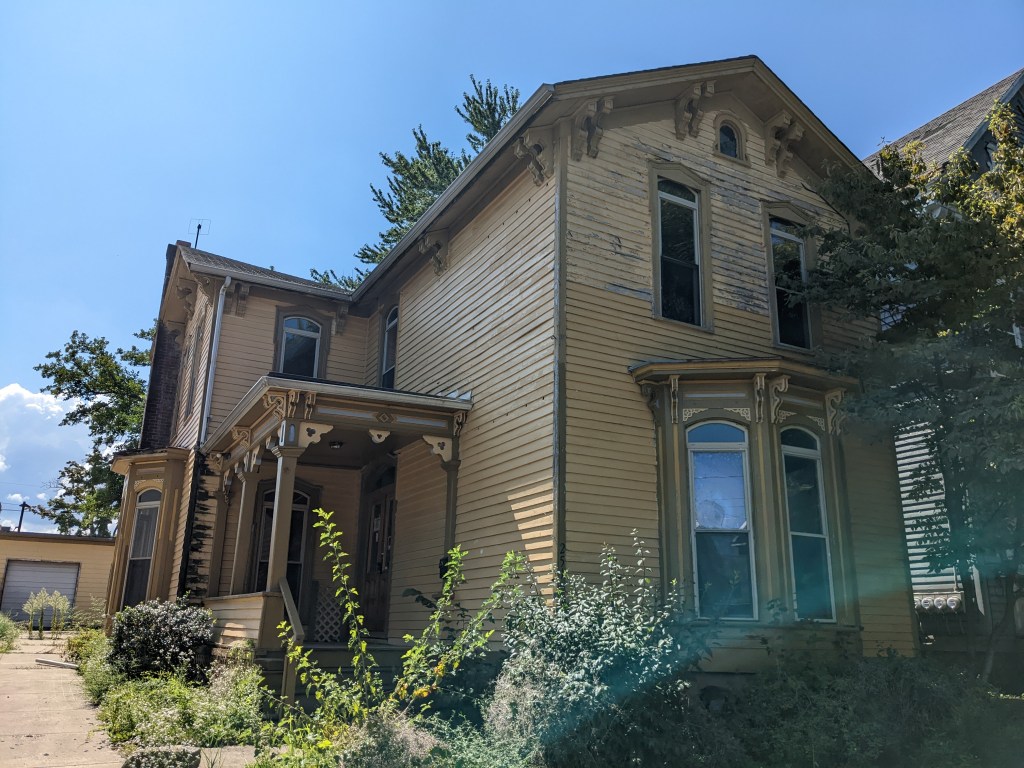
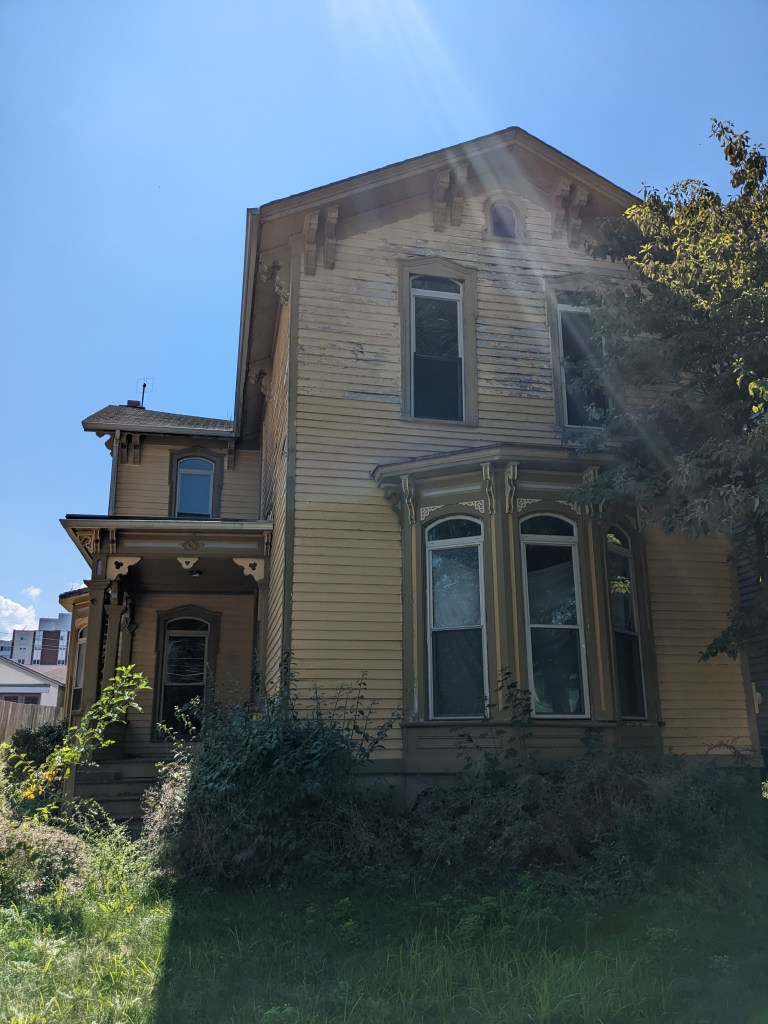
The home at 251 W 21st Street as it appears currently. It is within the block of W 21st Street that is classified as a Historic District on the National Register of Historic Places, and needs much care if it is going to continue to contribute to that district as a resource.

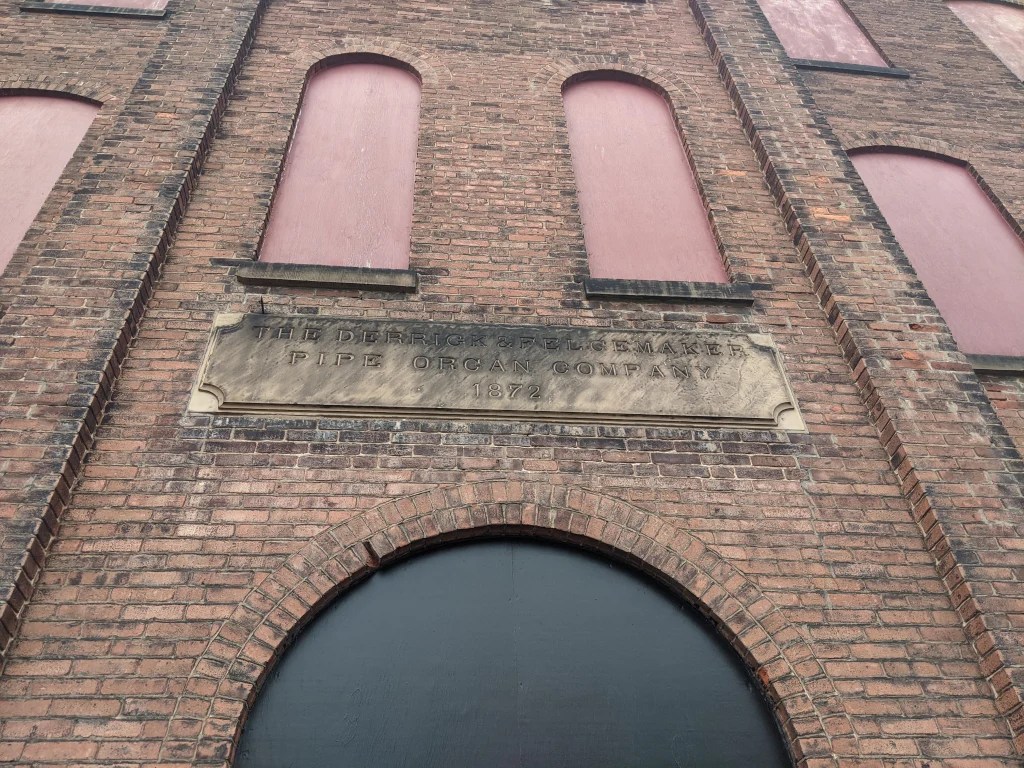
The home at 251 W 21st Street was built around 1872, which is the same year that Augustus Bernard Felgemaker and his wife, Julia Dickerman Felgemaker, moved to Erie from Buffalo and brought along their Pipe Organ production business. The company was known then as the Derrick and Felgemaker Pipe Organ Company and at one point had their factory, also built in 1872, in a still extant building on E 25th and Ash (which also served as the Colby Piano Factory after the Felgemaker outfit moved to 19th and Sassafras Sts).

The stone sign at the building at 25th and Ash reads “The Derrick and Felgemaker Pipe Organ Company 1872.

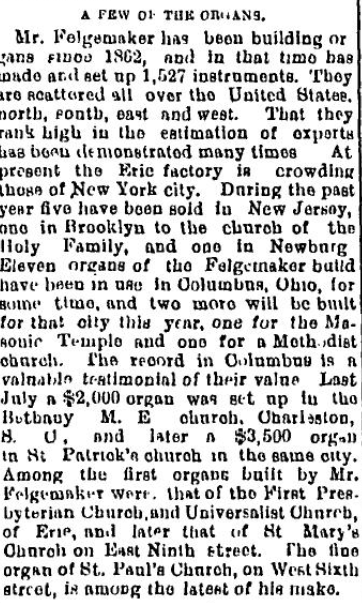
Pipe organ manufacturing was a booming business in Erie in the days of the Felgemaker production. The factory kept people in steady employ and made consistent, lucrative sales. Their production grew and grew, and they shipped out elaborate, artfully crafted pipe organs to hundreds of churches throughout the country, including many throughout Pennsylvania and New York that are still in use. As the 1886 article below states, Felgemaker made over 1,500 instruments between 1862-1886. In Erie, Saint Patrick’s Cathedral and St. John’s Lutheran still have Felgemaker organs in use for their congregations.

June 11th, 1886, Erie Morning Dispatch

Augustus died in 1905, and at that point the family was living in a home at 139 W 10th Street (which is long gone). His death notice in the newspaper poured over his good character: “Deceased was highly esteemed by all and his death will be universally regretted.” It goes on to list a short biography: He was the son of Joseph and Caroline Benning Felgemaker of Buffalo NY and was born on July 16, 1836. “Mr. Felgemaker became one of the leading church organ builders in the country and during the 46 years in which he engaged in the business, he placed organs in exactly 900 different churches.” “In his home life he was an ideal father and husband … in his business affairs, he was an honest and upright man … in his factory, he employed men who had been with him since he first began business and to them his death will be a heavy loss.”

“The fact that men could spend a lifetime in his employ speaks better than almost anything else in praise of the man who this morning answered the summons of the inevitable.”

251 W 21st Street was purchased by William and Elizabeth Huff sometime before 1920 and the family owned the home until William’s death in 1957.

After the Felgemakers left the home at 251 W 21st Street, it was purchased by William and Elizabeth Huff who would make the home their own for nearly 40 years. William was born May 14th, 1877 in Keating, PA, moved to Erie after marrying Elizabeth and lived in Erie for 41 years. The couple had eight children. He worked in the Signal Department of the Pennsylvania Railroad for 47 years and in his retirement, he enjoyed beekeeping, here at his home for all those years at 251 W 21st Street. He was a member of St. John’s Lutheran Church, which happened to have a Felgemaker Organ in use while he attended. He died in 1957, while his wife, Elizabeth, passed away 22 years earlier. It was after Huff’s death that the home at 251 W 21st Street began to change hands, become a rental property, and deviate from it’s original form.

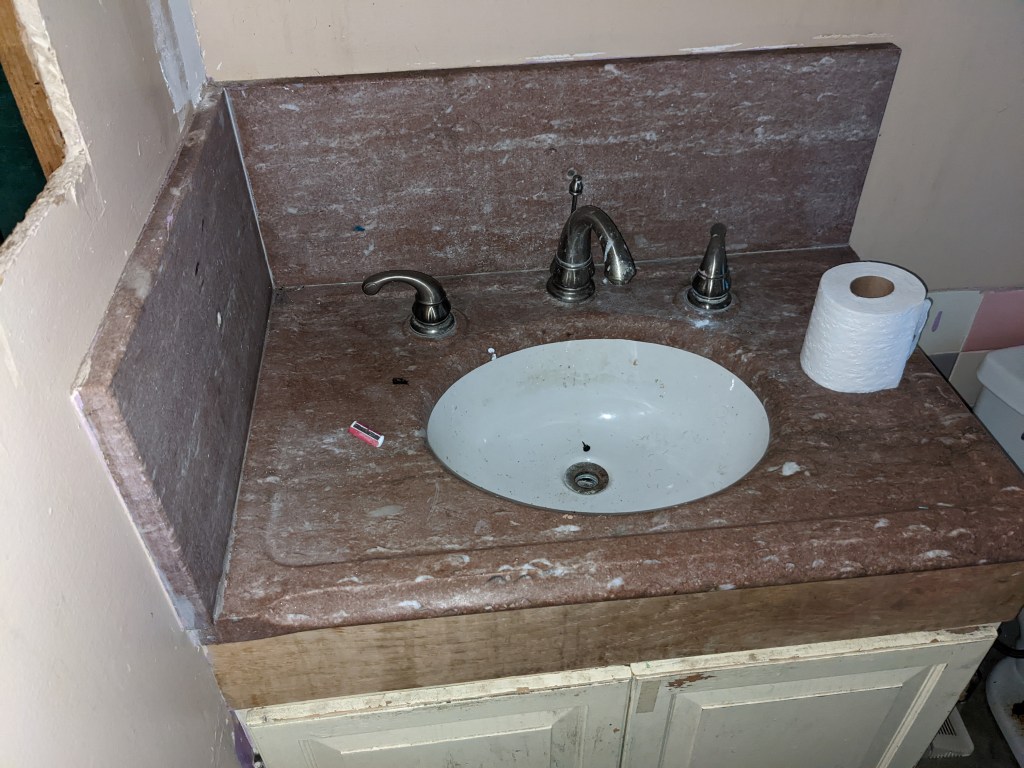
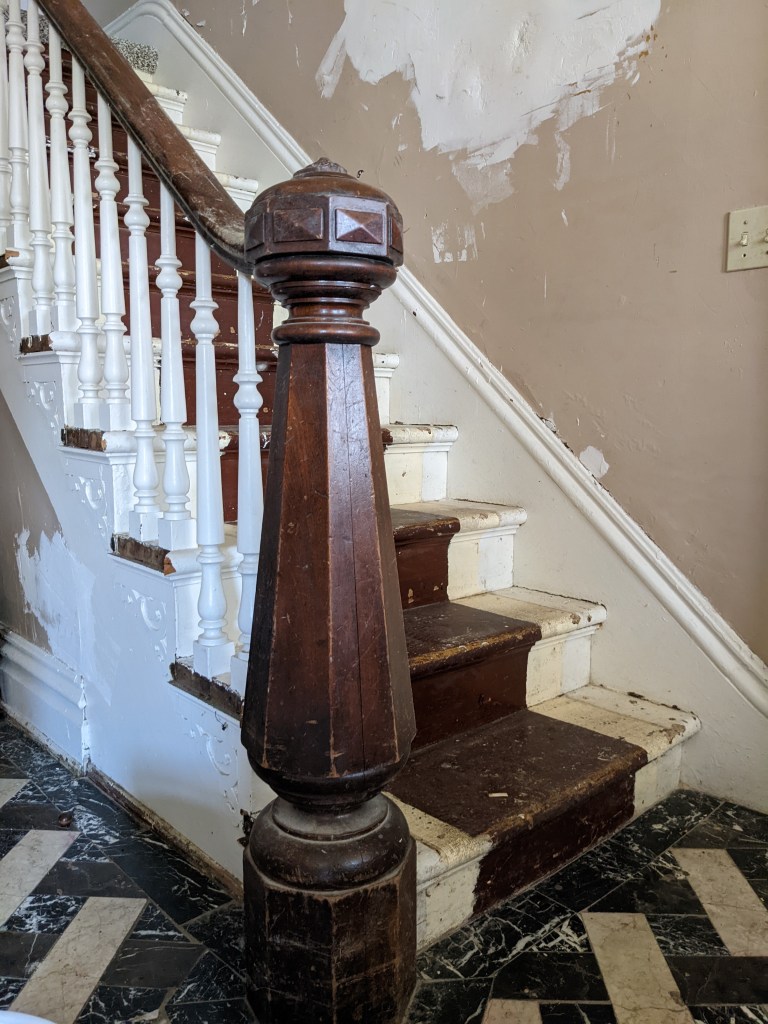
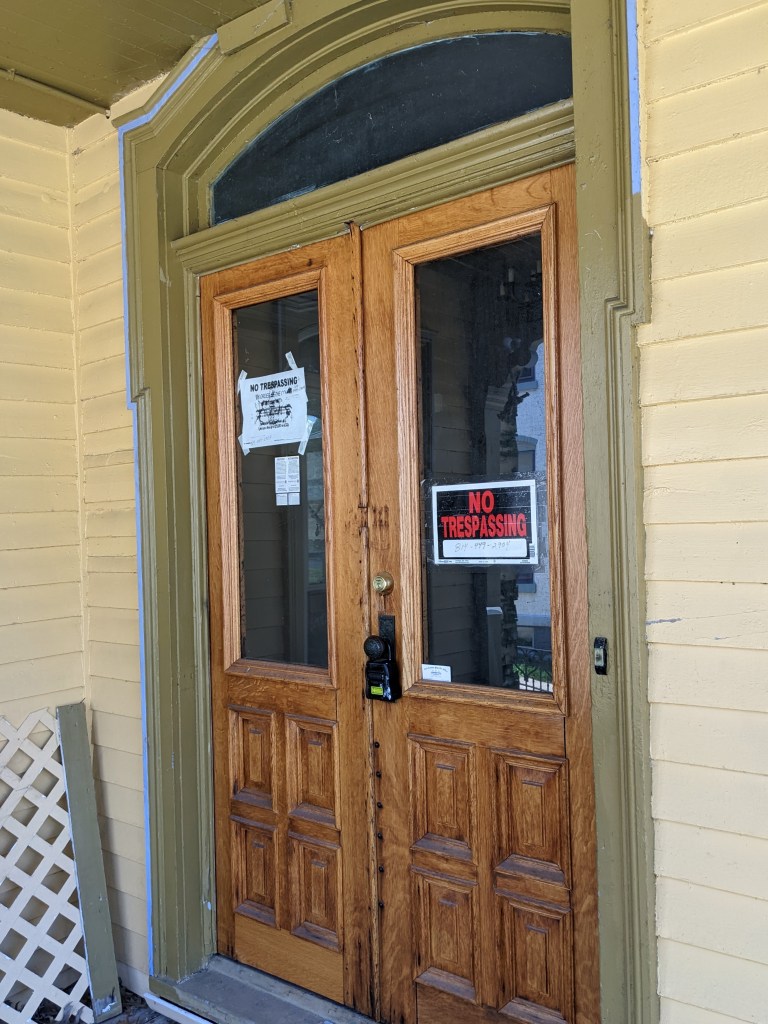
Currently the home is for sale by Howard Hanna for $65, 000 as a cash only/as is sale. It is in need of extensive repairs after housing a number of destructive tenants. There are some features of the home that are still salvageable, namely the newel post and grand staircase, two antique red marble sinks, the beautifully carved front door with hardware, woodwork and hardwood floors, a newish boiler with radiator heat. There has been water damage, and most of the rooms will need completely overhauled. This will take a special owner dedicated to saving the home, but once rehabbed, this could easily be a standout home on the block. Much of the original Italianate features remain on the exterior including multiple banks of bay windows, decorative cornices and corbels, clapboard, decorative trim-work, some original wood windows. This home, since it is in a Nationally Registered Historic District, can be eligible for Historic Preservation Tax Credits, given the correct situation. There may also be funding available through the City Redevelopment Authority.

A huge thank you to realtor Nanci Lorei with Marsha Marsh who took the time to show me this home and who cares about saving the historic homes of Erie.

114 East 34th Street // The Vance Nemenz House

This is the home at 114 East 34th Street as it exists today. It has gone through many changes throughout the years, but was originally constructed in 1928.

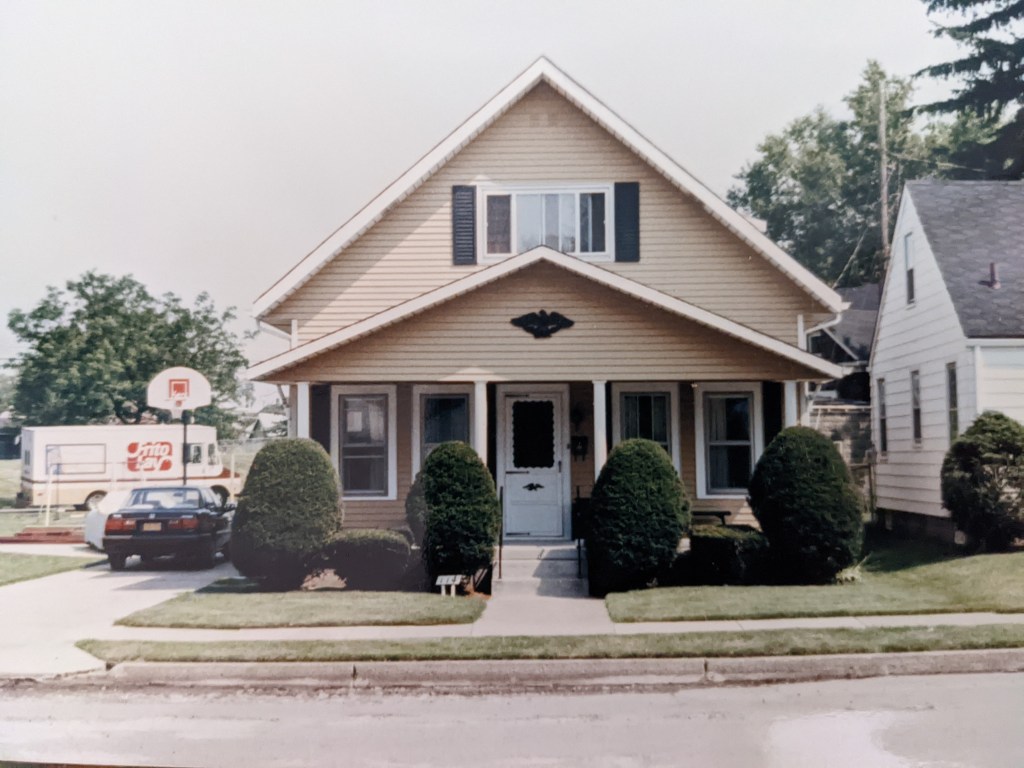
The bungalow at 114 E 34th Street was my childhood home, where I grew up, in the neighborhood of my youth. I have strong memories of playing in Baker’s Field behind my backyard, walking to Jefferson School playground with my cousins and neighborhood friends, hosting our annual “Don’t Let the End of Summer Be A Bummer” picnics in the huge backyard (which was essentially an entire un-built lot), riding my bike past the mansions of Glenwood Hills nearby, venturing into the woods by Mill Creek off Eliot Road. The home held many memories of the time my family owned it (from 1981-2007) and my mother has asked me numerous times to figure out its history. So for my mom, Pam, on Mother’s Day, here is what I came up with.

This is the home at 114 E 34th Street as I best remember it. Harvest Gold Aluminum siding with black shutters, the ever-present 1970s eagle adornments, the huge backyard with my father’s Frito-Lay Truck parked in back and the basketball hoop in the driveway.

The home at 114 East 34th Street was originally owned by George and Helen “Nellie” Vance. They purchased the home after it was built in 1928 and owned the home until Helen’s death in 1964. George Vance was born in 1884 in Dunkirk NY but moved to Erie as a child. His father worked at Erie Malleable Iron Works at 12th and Cherry (which will soon no longer be standing) and the family lived at 645 W 10th Street (which is no longer standing) in 1900 and at 558 W 11th (which is no longer standing) in 1920, eventually moving to 562 W 8th Street (which IS still standing).  George’s father, George Sr. was from Canada and his mother, Kate Froehlich Vance, was of German descent and grew up in Dunkirk NY. George was an engineer for the New York Central Railway his entire career, retiring in 1951. 

Helen was born in Erie in 1888 to Samuel and Cecelia Hauck. Her family lived in McKean and her father Samuel was a grocer. Her mother, Cecelia, was of Ohio Mennonite lineage and grew up on a farm. Helen’s family later moved to the City where her father worked as a merchant at Common Hose (women’s hosiery). 

Helen and George married in 1917. The couple had one child, John Richard Vance, who died at one year of age from gastro-enteritis. They never had any other children.

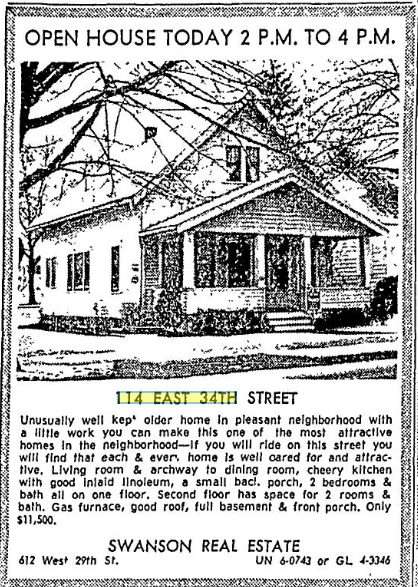
This ad from February 1964 shows the home at 114 E 34th St more like how it would have appeared originally with 9 over 1 wood windows on the second floor with wood columns on the porch. Prior to 1964, the home did not have a finished 2nd floor and the downstairs was configured in such a way as to contain two bedrooms.

After Helen died in 1964, the home was purchased by Edwin and Eileen Wagner who lived there for four years. Edwin and Eileen were both employees of General Electric.

From Erie Times News April 24th, 1949. Eileen and Edwin were the 2nd owners of the home.

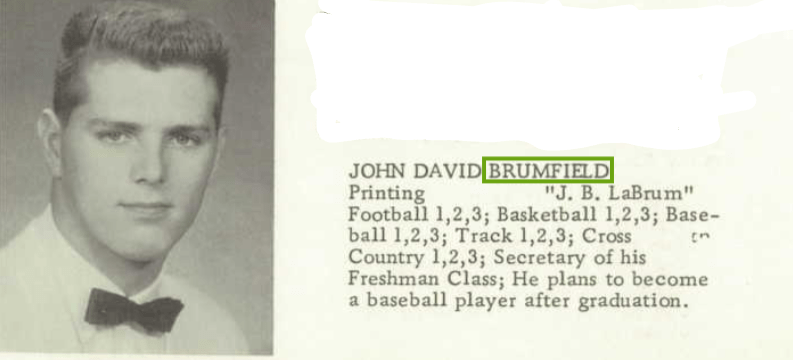
Then it was occupied briefly from 1968-1970 by David and Kristina Kendell. And in 1970 it was purchased by John and Loretta Brumfield, who owned the home up until my parents, Pamela and Dennis Nemenz purchased the home in the early 1980s. 

In his youth, John Brumfield was a standout baseball pitcher (who pitched a 7 inning 1 hitter against Strong Vincent, setting a long standing record, in his freshman year) and football Quarterback for Tech Memorial. He played for All Star Leagues and was a local high school baseball phenom (his name was in the papers constantly for his outstanding pitching prowess). He continued to play baseball as an adult for different local leagues. John and Loretta were married in 1964, they had a son, Tommy, who passed away at 2 years old.  They went on to have three more children. Upon selling the home in 1981, the Brumfields moved to Texas.

John Brumfield in his glory days as a multi-talented athlete; his favorite and most outstanding sport was baseball, at which he was an All Star Pitcher who set records for the Erie School District.

It was the Brumfield family who took the home from the 1920s to the 1970s and I recall vividly the puce green shag carpeting, the avocado tub and toilet, and the textured ceilings in the living room and dining room. I do recall a few remnants of the old, original home. There were original windows when we lived there that were replaced, but a couple remained: one rope and wood window in the first floor bathroom and one original casement window on the eastern side of the living room. There was still unpainted beadboard on the front porch ceiling as well as in parts of the kitchen, which also had a couple of original wood doors. 

My mother sold the home to downsize in 2007 and it was sold again in 2017 and in 2020. The interior has been totally renovated, with an open floor plan on the entire first floor. At some point, a large garage was constructed in what was previously the most spacious yard on the block (which is triangle shaped, and begins doubled homes along 34th and 33rd after 114 E 34th St). In some small 1970s victory to someone somewhere, the wood paneling that covered the second floor is still there (although it has been painted).

The Richards Hamilton House // 220 West 9th Street

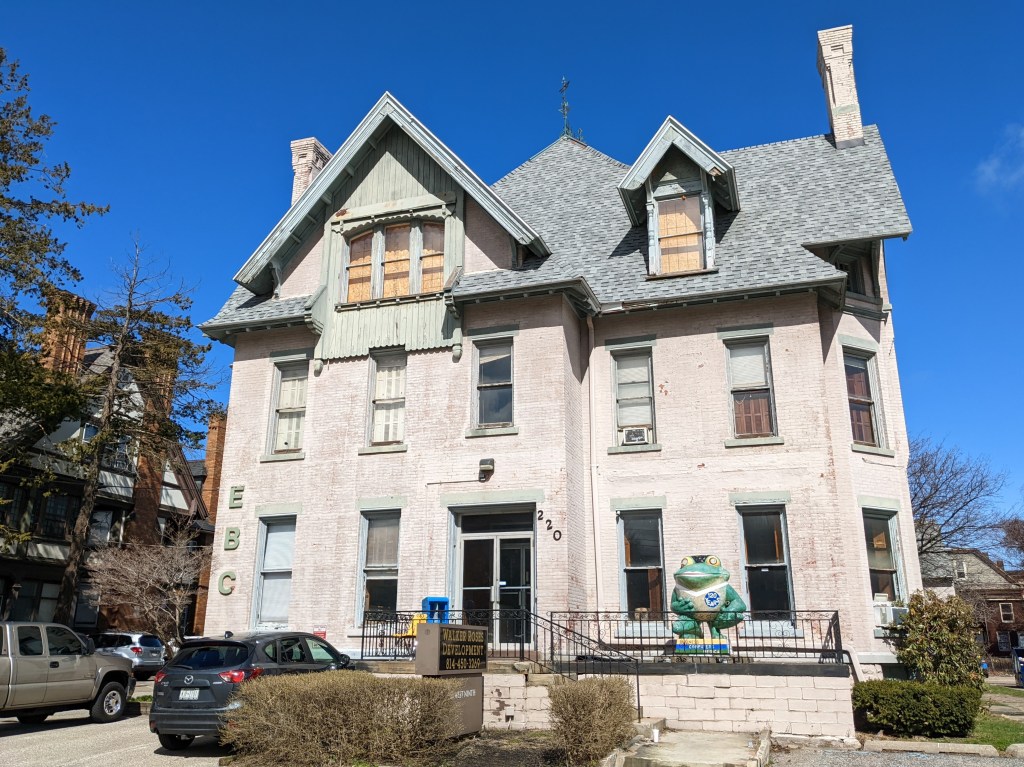
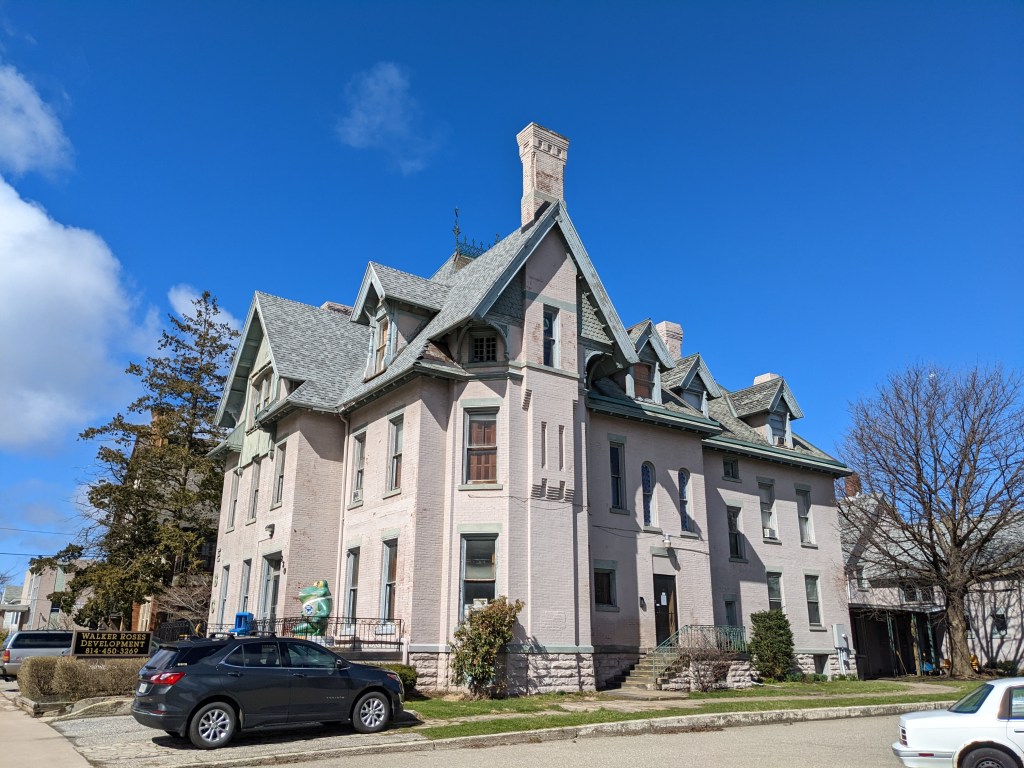
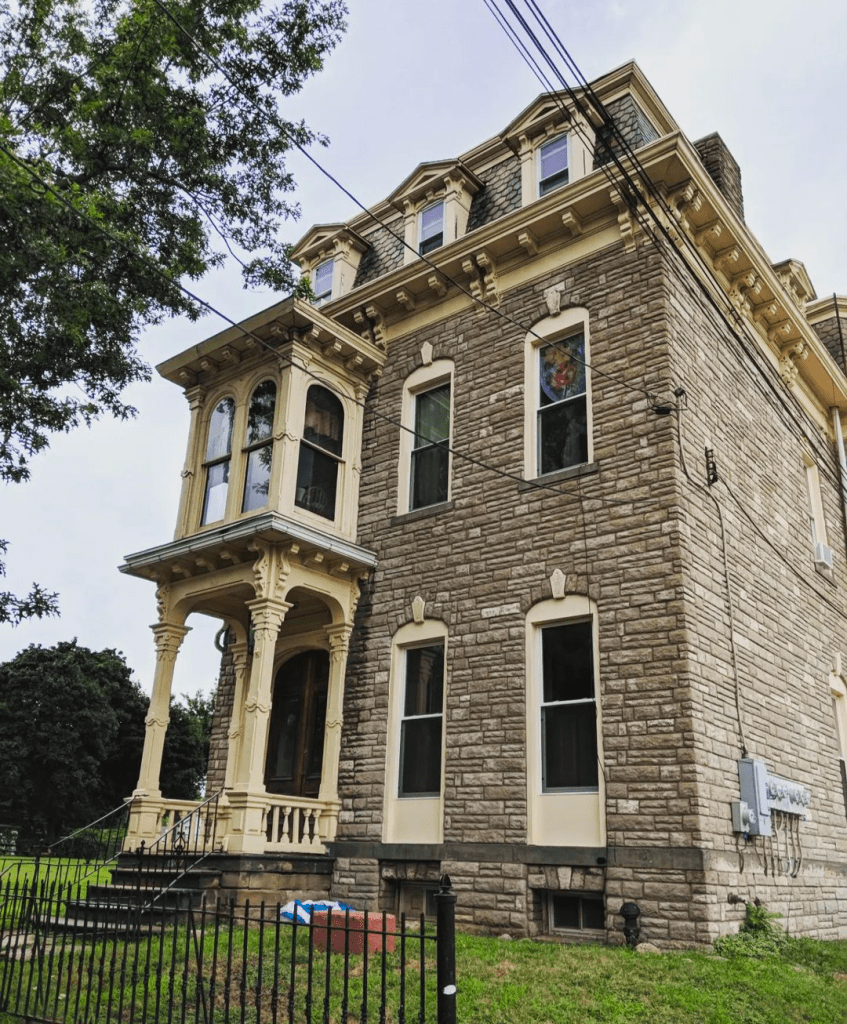
220 West 9th Street, built around 1888 by Capt. John Stevens Richards and Adelaide McAllaster Richards, was most recently a part of the Erie Business Center’s Campus (formerly Erie Business College).

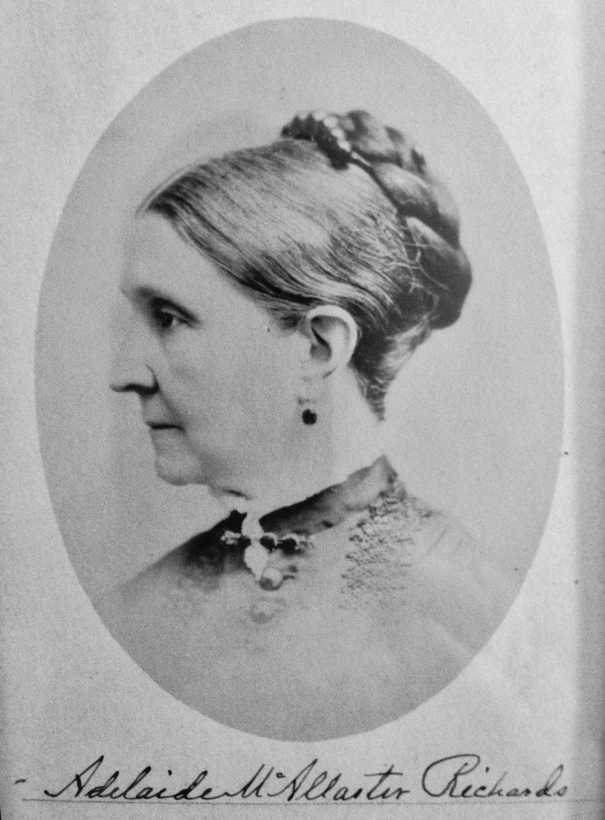
The home at 220 W 9th Street was originally built by Captain John Stevens Richards and Adelaide Philadelphia McAllaster Richards around 1888. The family’s original home was 214 W 9th (where the Lodge at Sass stands currently). John and Adelaide’s daughter Mary actually married her neighbor (from across the street at 205 W 9th), George Metcalf and they lived in the home at 214 W 9th after they were married, which is when John and Adelaide had this home at 220 W 9th built. Adelaide was a daughter of the American Revolution, her great grandfather, Richard McAllaster, was a member of the first board of selectmen of Antrim NH, 1775. He served in the Canadian expedition of 1776 and was in the battle of The Cedars

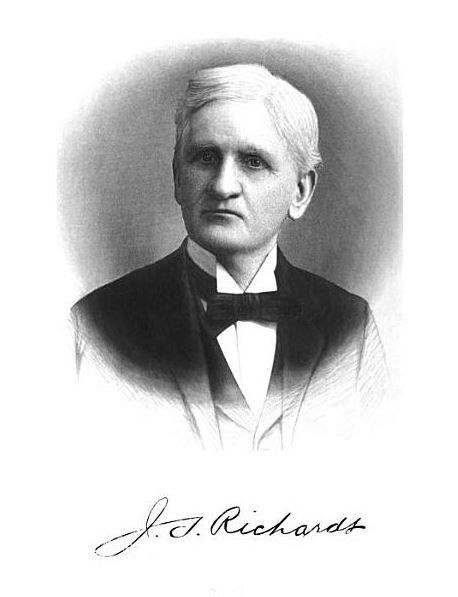
These photos of John Stevens Richards and Adelaide McAllaster Richards were found on Ancestry.com

Capt. John Stevens Richards’ biography is well published, as he was a very prominent member of early Erie society and incredibly wealthy. In addition to being a director of the 2nd National Bank of Erie, he took over the presidency of the William Scott Coal Company upon William’s death (he was also the executor of Scott’s estate) and was President of the board of directors of Hamot Hospital. 

According to the ever useful History of Erie County PA by J. E. Reed: “John Stevens Richards was born on the 5th day of June, 1821, at the Richards homestead, in Erie, Pennsylvania. He was the son of John and Ann Hinton Richards, natives of Cardiganshire, North Wales, but who were married in Erie in 1814. John Richards,the elder, went to sea from his home in Wales at a very early age, and had circumnavigated the globe three times when he entered New York City and apprenticed himself to Brown & Bell, ship builders. When the War of 18I2 broke out this firm was engaged by the Government to construct war vessels, and during the building of the slips of Perry’s fleet, forwarded a considerable number of men from New York to Erie, the elder Richards being among the number. Subsequently, and throughout his life, he made his home in that city, finally engaging in ship building.”

John Stevens Richards (the younger) began his career in shipbuilding along with his father, but soon realized that sailing the open waters was more appealing to him. After starting as deckhand on a number of vessels sailing the lakes, he was given command of ships in Ohio, Wisconsin and Michigan. He eventually became involved in shipping coal, and settled in Erie into that business. 

The massive 11,000 + square foot Victorian Stick Style home is adorned with some wood paneling in the front (the writer assumes there was more of this ornamentation in the past), roof cresting, multiple gables creating a number of asymmetrical angles, along with paneled and ornamented chimneys.

Richards died in 1897 and Adelaide remained in the home until her death in 1913 when it was purchased by William Hamilton. William was born in England and his family came to Erie in 1870 when William was 5 years old. William’s father William was a machinist and William (the younger) went into the same line of work and eventually became president of the Erie Car Works, which manufactured freight cars. William Hamilton took over the Presidency of the Erie Car Works after William Galbraith (whose home is now the Women’s Club of Erie on w 6th and Myrtle). He also served as the President of the Erie Chamber of Commerce, served as Water Commissioner, was President of the Erie School Board, Director of Hamot Hospital, Director of the Elmwood Home, and was President of the Erie YMCA. He was also a candidate for Mayor at one point. He was instrumental in the creation of Zuck Park, single handedly planting a number of rose beds there.

According to his obituary: “Remaining active until his illness a week ago, he was a familiar part of the downtown scene, especially at the ‘Y’ where he would stop to talk with old friends.” The family lived in the home from around 1913 until 1922, when they temporarily moved to Newark OH to oversee the Erie Car Company’s absorption of a bankrupt Jewett Car Company outfit. Upon returning to Erie, the family lived at 2642 Glenwood Park Avenue until Charlotte’s death, when William moved in with his sister Hattie at 2920 Poplar Street.

Erie Times News March 21, 1925

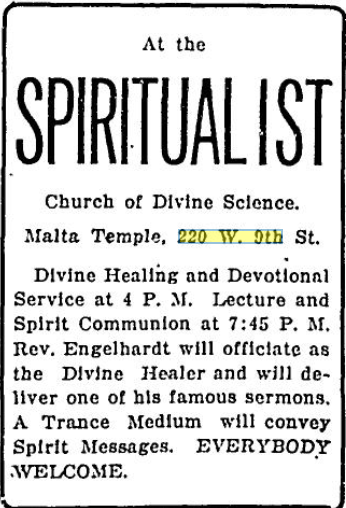
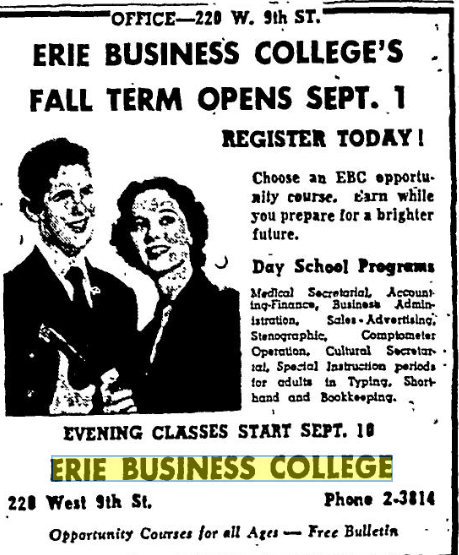
The home at 220 W 9th was then occupied for only a couple of years by Neilsen Streuber, of a prominent local leather manufacturing family, when it was eventually sold to the Knights of Malta and the Church of Divine Science in 1923 to house their “club house.” By the 1940s the building became occupied by Erie Business College which was founded in 1884 and was run, until recently, as Erie Business Center (the home at 220 W 9th being a part of their campus which eventually included the building at 246 W 9th – built in 1969) and which closed permanently in 2014. The home was purchased in 2016 by DTW Development LLC (the sign in front of the property states ‘Walker Rose Development’) and it appears to be apartment rentals.

Erie Times News August 31, 1953

355 E 9th St // Weber Studio

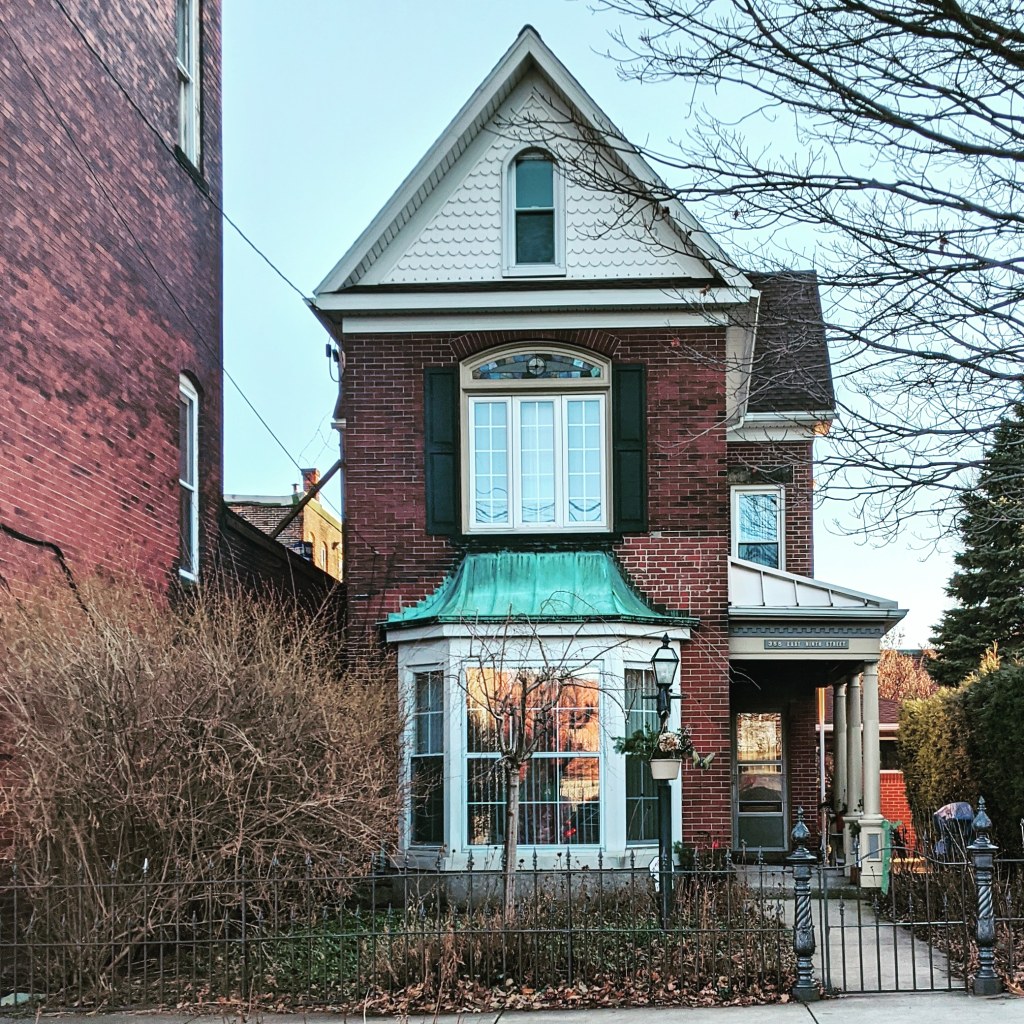
This home at 355 E 9th Street was built around 1880 for the Weber Family and an adjoining building was their family’s photography studio and gift shop: Weber Studios.

The home at 355 E 9th Street was likely built prior to 1880 (it appears in ownership to the Weber Family on the 1880 census but does not appear on the 1870 census). This home remained in the same family from the day it was built until 1989 when it was sold to the Benedictine Sisters who own the property currently.

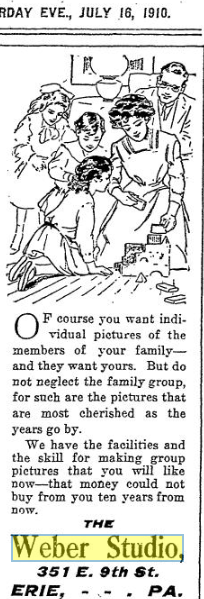
This is an advertisement for Weber Studio appearing in the Erie Times News July 1910

F.W. (Frank William) Weber was born in Erie on May 15th, 1857 to Maria (Spath) and Franz Anton Weber who immigrated to Erie from Germany. According to A History of Erie County PA, Franz Anton Weber was a blacksmith by trade until his health failed then he became a grocer. “He was buried on the present site of St. Vincent’s Hospital and the body was later removed to Trinity cemetery, Erie.”

F.W.’s wife, Helen Rechtenwald Weber’s mother, Eva Specht came from France and was a dressmaker, her father, Peter Rechtenwald came to Erie from Germany and he was a tailor; the couple had a tailoring business on State Street (1016 State Street, at one point). Peter Rechtenwald served in the Civil War in Pennsylvania’s 19th Regiment. Both families (the Rechtenwalds and the Webers) were long time residents of the areas of E 8th-E 10th near Parade Street for generations.

F.W. Weber was a local photographer and specialized in portraits (family portraits and weddings). According to A History of Erie County PA: “F. William Weber grew up in Erie and after receiving his education was employed by his brother, F. J., who was a well known photographer of Erie. When he was 21 years old Mr. Weber purchased his brother’s interest in the business, which is located at 351 East 9th Street, and is now conducted by his son, H. J. Weber. Mr. Weber has been considered the leading photographer of the city for many years and is an artist in his work. He also has an interest in the Erie Picture and Framing Company.” The studio (Weber Studio) was in a building adjoining the family home (with the address 351 E 9th). He was also the Vice President of the Parade Street Market Association, which was a large building with an open air farmer’s market located at 915-931 Parade Street and was in business from 1895 until the 1960s. Helen died in 1934 and F. W. in 1946.

The couple had 14 children over 22 years (11 living through childhood) and the home was occupied by their descendants; their youngest child, Rosemary, continued operation of the Weber Gift Shop until 1970. Leanor Weber Weiderle resided there most recently with her daughter, Helen Rapp. Leanor died in 1985 and in 1989, the home was sold to the Benedictine Sisters of Erie, who own the property to this day. The home is directly next door to the former St. Benedict Academy, which was an all girls Catholic High School (where the female Weber children attended) that was established in 1869. The school was moved in 1955 to East 10th Street and closed permanently in 1988. The home at 355 E 9th is currently used as a priory for the Benedictine Sisters and appears in searches as St. Scholastica Priory.

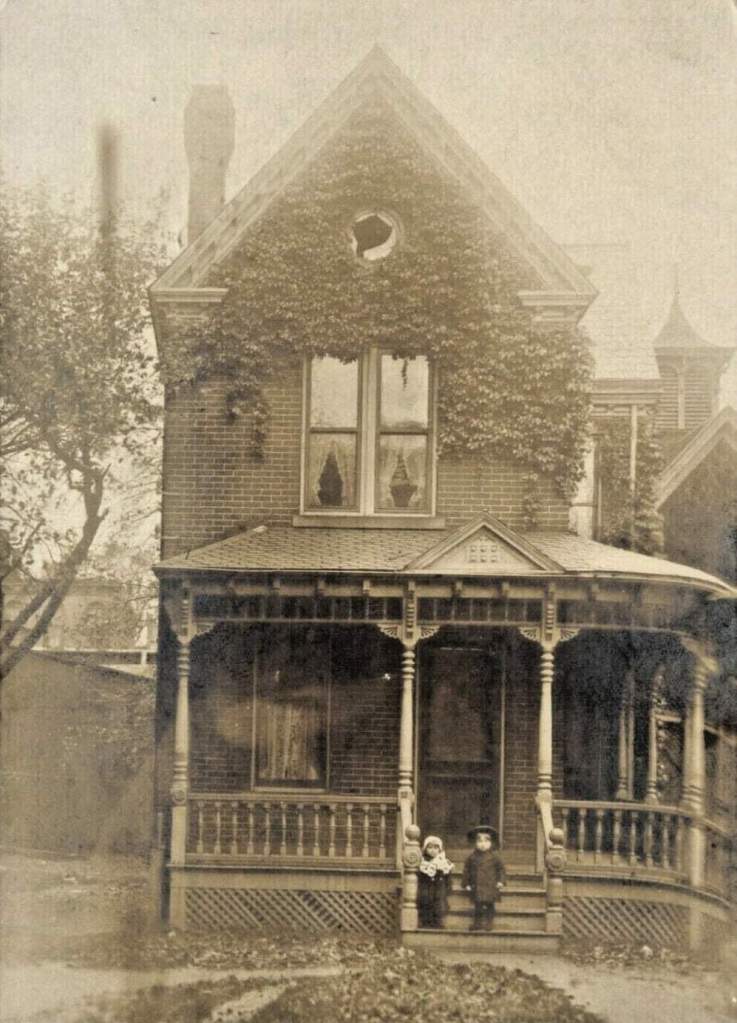
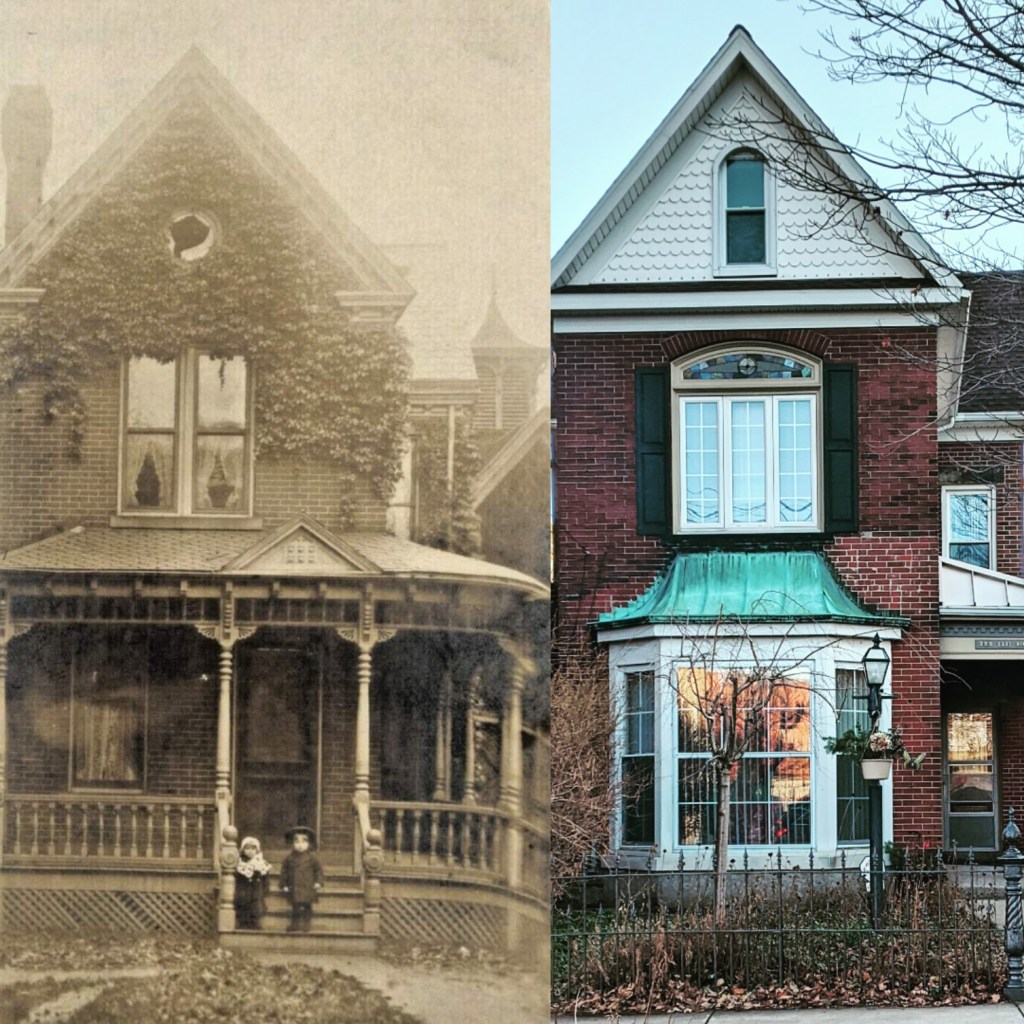
This historic image was posted in the Project Erie Pennsylvania Facebook group in January 2021 and it was speculated that it is an early photograph of 355 E 9th Street. The footprint of the home looks very similar, although the facade has been altered over the years (and a bay window added, note the repointing of the bricks in the modern photo, as well as the replacement windows and aluminum in the gable). Given that the Webers were photographers, it stands to reason that they would photograph their own home. This has not been verified and is a speculation. See below for a side to side comparison of the photographs.

The Hearn House at 832 Cascade :: Sarah Hearn Memorial Presbyterian Church

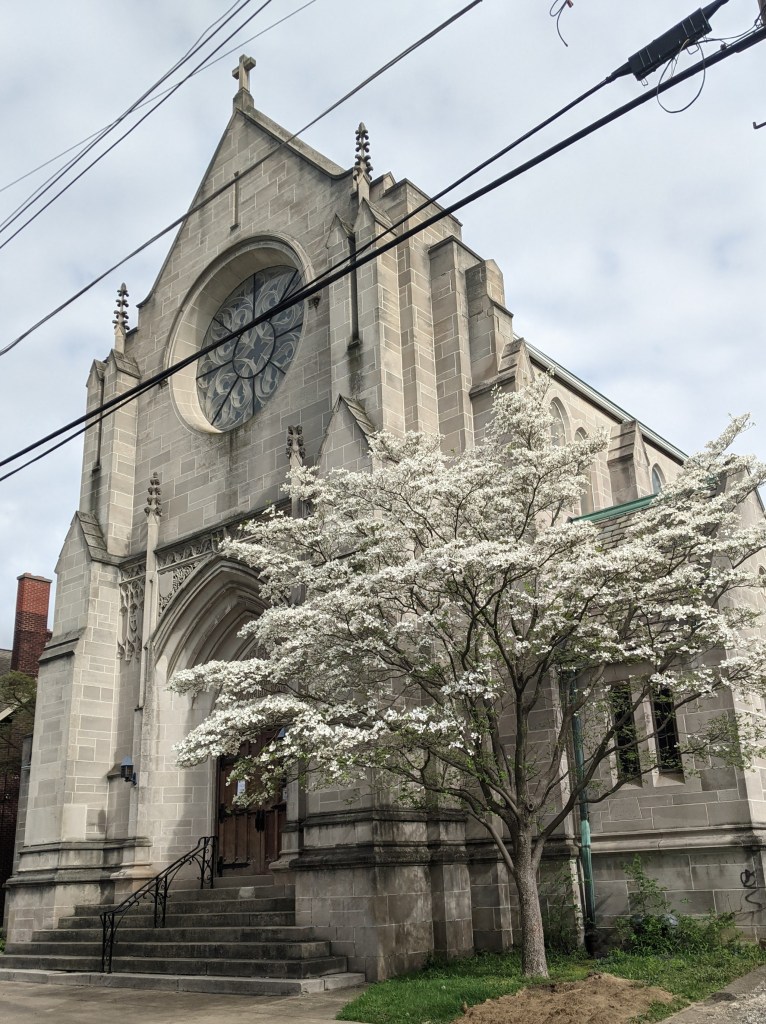
The church at 947 W 9th was constructed in 1926 in Sarah Hearn’s memory, according the the will of Sarah’s son Hudson Hearn.

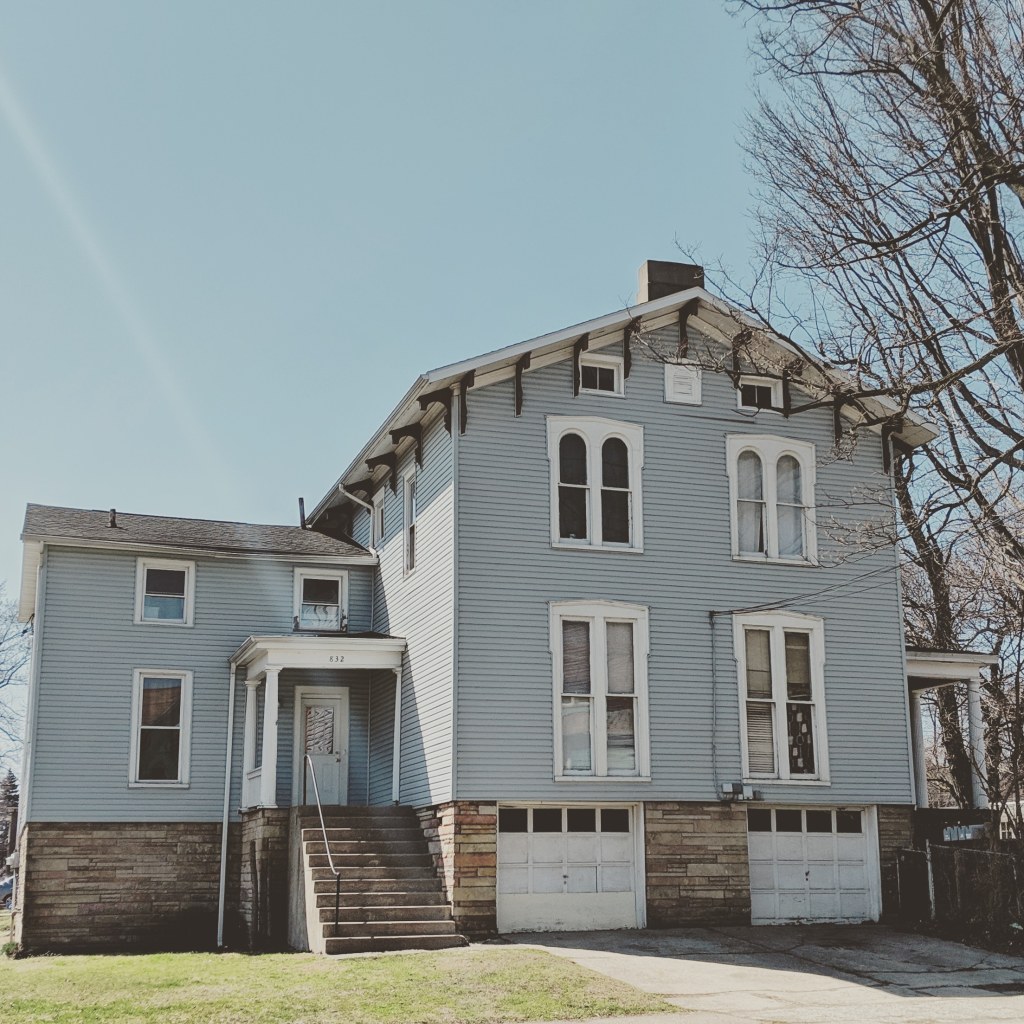
The house at 832 Cascade was built by Sarah Hearn’s son Charles and her grandson C.G Hearn in the late 1800s

The Sarah Hearn Memorial Presbyterian Church at 947 W 9th Street and the home at 832 Cascade both still stand to represent the built history of the Hearn family in Erie.

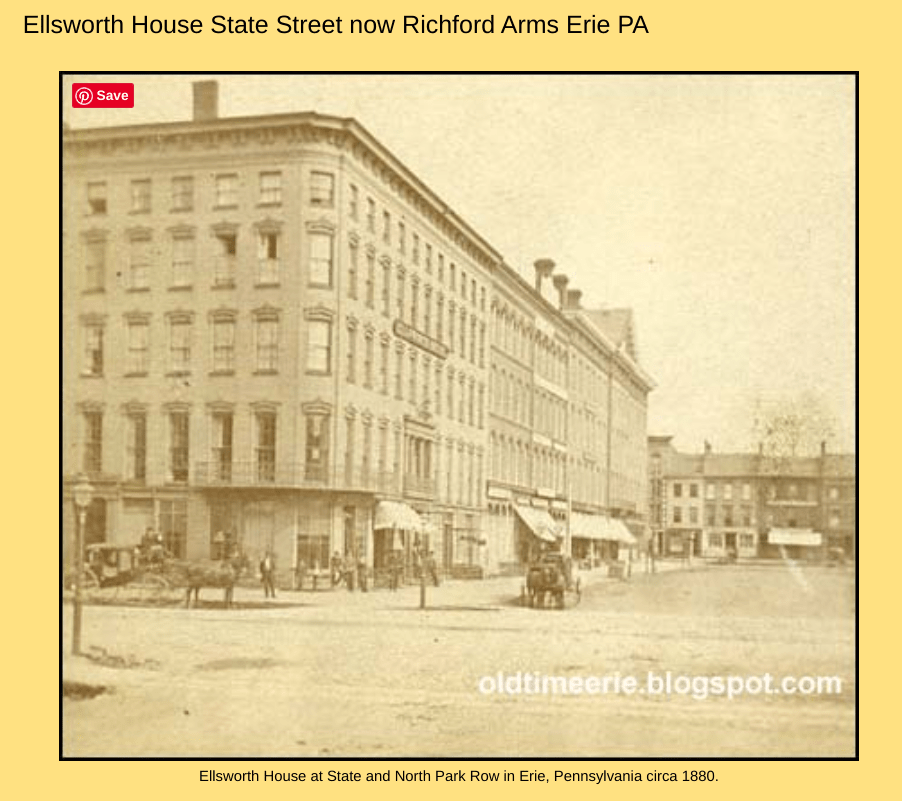
Sarah Loomis Brown Hearn was born in 1823 to Hiram and Philena Brown.  Hiram Brown was born in North East PA in 1800, his parents Lemuel Brown and Sarah Loomis were pioneer settlers of this area of Erie County. Lemuel Brown one of the first tavern owners in North East PA. The family’s original tavern was on the site of the present day Haynes House. According to the History of Erie County Pennsylvania: “In course of time, the tow Browns almost monopolized the tavern business of the town. Hiram L. eventually purchased the Eagle Hotel at the corner of State street and the northeast side of the Park in Erie. It burnt down and he erected another house on its site, which was known as Brown’s Hotel until its purchase by Col. Ellsworth, when the name was changed to the Ellsworth House.” The Brown’s Hotel was built in 1851, became the Ellsworth House in 1869 and was torn down entirely in 1891 (By William Scott, who had intentions to build a new building there but died before he got a chance, leaving an empty lot until the Ford Hotel/Richford Arms was built in 1928).

This image of the Brown’s Hotel/Ellsworth House on the northeast corner of State and North Park Row is from the Old Time Erie Blog

Lemuel Brown (Sarah’s grandfather) was born in 1774 in Massachusetts, his wife, Sarah Loomis was also born in Massachusetts and her father, Seth Loomis, was also an early settler of North East, coming to Pennsylvania around 1800.  The Loomis family was also integral to the foundation of North East.  Seth’s grandson, Rufus, built the first church there. These two pioneer families of North East, the Brown and Loomis family joined when Lemuel Brown married Sarah Loomis.  Their son Hiram’s daughter (Lemuel and Sarah’s granddaughter), Sarah Loomis married John Hearn, who immigrated in Erie from Ireland.  Sarah, John, and their children lived at Sarah’s parent’s hotel on State and North Park Row for many years.

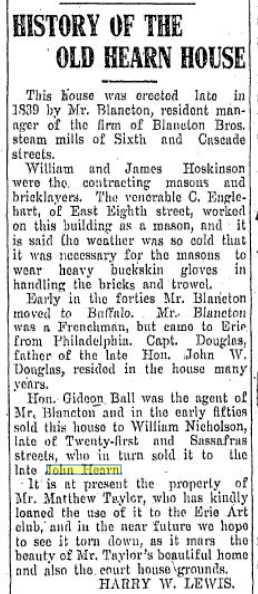
Eventually Sarah and John Hearn purchased their home at 144 W 6th Street (constructed in 1839), which was a brick house adjoining what was once the Erie County jail and which is now the parking lot for the County Courthouse.  John was a coal merchant and the couple was very wealthy.  According to the 1870 census, John Hearn’s personal value was $145,000 which equals approximately $3,000,000 today.

November 13, 1906 Erie Times News chronicles the construction and ownership history of 144 W 6th St. In 1906, all seemed eager to tear it down.

Sarah and John’s son, Hudson, was ultimately responsible for the construction of the Sarah Hearn Church at 947 W 9th Street.  According to Hudson’s will: “as soon as the common stock of the Nickel Plate railroad reached the price of $115 a share, 1000 shares were to be sold and a church erected to the memory of his mother.”  Hudson was unmarried and lived at his mother’s residence at 144 W 6th St until his own death, 3 years after his mother’s death.  Construction on the church was eventually completed in 1926 with work being done by the H. Platt Company.  A time capsule was placed in the cornerstone of the building containing “a bible, an American flag, program of the cornerstone laying service, officers of the church, history of the church, newspapers and other articles.”  The original pastor of the church was Charles S. Beatty. Sarah Hearn’s great-grandson, George Hearn, son of Chester and Harriet Hearn, was present at the ceremony. The church is now known as New Revelation Full Gospel Baptist Church but it does not have an active congregation presently.

This historic image of the Sarah Hearn Memorial Presbyterian Church is from the Indiana Limestone Photograph Collection

Chester Gordon Hearn, Sarah’s grandson, and his wife, Harriet Nelson Hearn occupied the home at 823 Cascade. Tax records for this property exist from around 1896, but this intersection of the city was also the home of Chester’s parents, Capt. Charles C. and Helen Hearn, where Chester would have grown up, as well as Chester’s wife, Harriet, who grew up on the opposite (northeast) corner (which is now an empty lot).  The address was sometimes listed on census reports as 1002 W 9th St, particularly in reference to Charles’ address, which likely means either this home was built before 1896 or another dwelling was there before the current home was built with the 832 Cascade address.  In 1907, Chester had the southern addition and porch added.  Chester Hearn was a banker, auditor and cashier for the First National Bank which was established by William Spencer and his son, Judah Colt Spencer. Chester’s mother, Helen Hayward Hearn, was a daughter of the American Revolution: her Great Grandfather, Daniel Hayward Jr. served in Capt. Gershom Nelson’s company, Col. Ezra Wood’s regiment, of the Massachusetts Continental Line.  Chester and Harriet had four children: Chester Jr (a banker), John (who died at age 28 from meningitis), George (a Lieutenant in the Coast Guard), and Harriet (a teacher in Erie’s Public Schools). Chester died suddenly in 1934 and Harriet and, sporadically, her adult children lived in the home on 9th and Cascade until around 1944.  Harriet moved to 453 W 6th Street after that time and lived there until her death in 1965. The home is now a four family unit apartment building.